
- Passive exoskeletons work with springs, active ones with a motor and battery – depending on the design, they support the back, shoulders or legs.
- IFA measurements: back exoskeletons reduce peak loads on the lumbar spine by around 11–22% in the lab, but only by about 4–14% in everyday construction work.
- List prices: Hypershell from €999 (EU, since May 2025), Ottobock Shoulder €4,900 (2022), medical walking exoskeleton around €100,000 (2020).
- ReWalk Personal has been listed in Germany's medical aids directory since 2018 (23.29.01.2001); cost coverage for paraplegia is possible but assessed case by case.
- In the workplace, exoskeletons are a last-resort personal measure; a risk assessment is mandatory, and the BG BAU has subsidized them since July 2025.
An exoskeleton is a wearable assistive system that supports muscles and joints during certain movements. What sounded like science fiction just a few years ago has, by 2026, arrived in three very different worlds: on factory floors and construction sites, in the rehabilitation of people with paraplegia and – brand new – in hiking, cycling and mountaineering. The range is correspondingly wide: from an unpowered shoulder support to a motorized walking system that costs almost as much as a midsize SUV.
This guide classifies the types of exoskeletons, shows what independent studies by the DGUV, IFA and BAuA were actually able to measure, cites documented prices and explains when German health insurance pays and which occupational safety rules companies must follow. At the end, there is a checklist for anyone who wants to buy an exoskeleton. One important note up front: Bot Up Your Life does not carry out its own tests. All information is based on published studies, government documents and manufacturer specifications, which we label as such.
What is an exoskeleton, and what types are there?
The German Social Accident Insurance (DGUV) distinguishes between two basic designs:
- Passive exoskeletons work without a power supply. Springs, gas springs or elastic elements store energy when the body bends or the arms are lowered and release it again when straightening up or lifting.
- Active exoskeletons have a drive, usually electric motors with a battery, less often compressed air. They provide partial or full support and can often be adjusted in levels.
There are also hybrid solutions in which sensors evaluate muscle signals, for example, to control the support. By body region, exoskeletons can also be divided into three groups: back or trunk support systems for lifting and bending work, shoulder and arm systems for overhead work, and leg systems that support the hip, knee or entire leg.
By purpose, this guide distinguishes three fields: industry and skilled trades, medicine and rehab, and leisure. The boundaries may blur, but the legal situation, price and cost coverage depend heavily on which field a device belongs to.
Exoskeleton for the back, shoulders or legs: Which design suits which use?
Industry and skilled trades: Passive back and shoulder exoskeletons dominate here. Typical applications are overhead assembly, order picking, work close to the floor or furniture delivery. The DGUV explicitly names non-stationary workplaces as a sensible field, because lifting aids, lift tables or vacuum lifters are difficult to use there. Active back systems with motors target tasks in which heavy loads are repeatedly moved or held. The German armed forces (Bundeswehr) have also had exoskeletons studied for their logistics: in the ExoLog project from 2019 to 2023, Fraunhofer IPA developed demonstrators for the upper and lower body.
Medicine and rehab: Motorized walking systems such as ReWalk (manufacturer Lifeward) or systems from Ekso Bionics enable people with paraplegia to stand and walk with forearm crutches. They are used in hospitals for therapy and – for selected models – also for everyday life at home. In September 2025, the ReWalk 7 model received CE marking for the European market.
Leisure and hiking: In recent years, a new segment has emerged: lightweight, motorized hip exoskeletons for hikers, cyclists and active older adults. Well-known providers are Hypershell and Dnsys. According to the manufacturers, the devices weigh around 1.6 to 1.8 kilograms, are strapped around the hips and thighs and provide support when walking uphill. Anyone looking for a leg exoskeleton today usually ends up with these models. However, the advertised percentages for reduced strain come from the manufacturers themselves or from testing services they commissioned; at the time of going to press, we were not aware of any independent, published efficacy studies for these leisure devices.
How effective are exoskeletons according to studies?
The honest answer: they can provide measurable relief, but far less across the board than some advertising suggests. The most important German findings come from the DGUV's Institute for Occupational Safety and Health (IFA).
- Lab study on passive back exoskeletons (2020): In a study with 12 people lifting 10 and 20 kilograms, peak joint moments in the lumbar spine fell by an average of about 11 to 20 percent. Peak activity of the back extensor muscles decreased by about 18 to 27 percent – but only when lifting from a low starting position. Averaged over the entire lifting phase, the relief was only 6 to 8 percent.
- Comparison of active and passive systems (2025): An IFA team compared one active and two passive back exoskeletons in 12 people. When lifting 10 kilograms, the peak moment at the lower lumbar spine fell by 11 to 22 percent, depending on the device. When holding a static bent-forward posture, the active system provided significantly more relief at 41 percent than the passive models at 12 and 20 percent.
- Construction site instead of lab (AWExo project, completed December 2025): Two passive trunk exoskeletons were measured during construction work such as bricklaying, paving or scaffolding. In the lab, relief of about 6 to 26 percent was found depending on the task; in real everyday work, it was only about 4 to 14 percent. The support was effective in only 20 to 80 percent of working time, and the effects varied greatly between individuals.
The DGUV emphasizes that exoskeletons only have a noticeable effect in a clearly bent-forward posture and mainly compensate for the weight of one's own upper body or arms; additional loads are still borne by the musculoskeletal system. In a 2024 report on the long-term use of passive systems, the BAuA (Federal Institute for Occupational Safety and Health) concluded that fit, comfort and availability at the workplace determine acceptance, and that exoskeletons can change movement patterns. According to the DGUV, it is still unclear how use over months or years affects the body, for example whether muscles weaken due to reduced strain.
How much does an exoskeleton cost? Prices at a glance
Reliable prices are scarce, because many industrial suppliers only sell or rent on request. The following figures are documented, but should each be read with their date:
- Leisure exoskeletons: Since May 20, 2025, Hypershell has listed prices in Europe of €999 (Go X), €1,199 (Pro X) and €1,799 (Carbon X). The top model, X Ultra, is listed in the US at $1,999 (as of June 2026). For the Dnsys X1, a trade magazine cited a range of $999 to $1,999 depending on the version in June 2026. Significantly lower promotional prices can sometimes be found at retailers.
- Industrial exoskeletons: For the passive Ottobock Shoulder system, a list price of €4,900 was reported in 2022. Current prices for other industrial models are usually only available on request.
- Medical walking systems: A 2020 case before the State Social Court of North Rhine-Westphalia concerned an exoskeleton costing around €100,000. In the US, Medicare set a flat rate of $91,032 for personal exoskeletons in 2024.
So anyone searching for "exoskeleton price" should first clarify which class the device belongs to: there is roughly a hundredfold difference between the cheapest leisure model and a medical walking system.
Does health insurance pay for an exoskeleton?
For leisure and industrial exoskeletons: no. For medical walking systems for paraplegia in Germany: possibly yes. The key points:
- Medical aids directory: In June 2018, the National Association of Statutory Health Insurance Funds (GKV-Spitzenverband) added the ReWalk Personal to its medical aids directory under aid number 23.29.01.2001. The indication is bilateral paralysis of the hip, thigh and lower leg muscles with loss of the ability to walk. The listing makes the application easier but does not replace an individual assessment.
- Case law: In 2020, the State Social Court of North Rhine-Westphalia ruled (case no. L 5 KR 675/19) that an insured person with paraplegia is entitled to a prescribed exoskeleton and cannot be referred to an active and standing wheelchair instead. The court classified the device as a medical aid to compensate for lost leg function. An appeal to the Federal Social Court was allowed; we were unable to establish conclusively how the case ended.
- Supply contracts: According to Lifeward, it has contracts with several major health insurers in Germany, including BARMER, which together cover around 45 percent of people with statutory health insurance (as of September 2025).
Whether other systems, such as those from Ekso Bionics, are currently listed in the medical aids directory should be checked directly in the GKV-Spitzenverband directory or with one's insurer. For companies, there is a different route: since July 1, 2025, the BG BAU (the German employers' liability insurance association for the construction industry) has subsidized exoskeletons as part of its occupational safety bonuses. According to its information sheet (as of September 2026), requirements include CE marking, German-language operating instructions, training and a professionally supervised two-week field trial. The BG BAU provides the subsidy amount on request. This section is not a substitute for legal advice.
Occupational safety and standards: What companies need to know
In occupational safety, exoskeletons count as a personal measure. In the hierarchy of technical, organizational and personal measures, they come last. A company must therefore first check whether a workplace can be designed differently, for example with lifting aids or a different working height. Only if that is not enough does an exoskeleton come into consideration.
Obligations and recommendations at a glance:
- Risk assessment: It must be carried out anew for each specific device. Considerations include malfunctions of active systems, tripping and fall hazards due to extra weight, getting caught on protruding parts and quick removal in an emergency. The IFA provides a guide for this.
- Training and field trial: The DGUV recommends combining exoskeletons with training and exercises. In its decision matrix, the BG BAU provides for a supervised field trial of at least two weeks.
- Legal classification: Depending on its purpose, an exoskeleton can fall under machinery law, medical device law or the PPE Regulation. According to a position paper by the Commission for Occupational Health and Safety and Standardization (KAN) from July 2026, no exoskeleton has yet been certified as personal protective equipment. For machinery, the new EU Machinery Regulation 2023/1230 applies from January 20, 2027, replacing the Machinery Directive.
- Standards: There is not yet a dedicated product standard for industrial exoskeletons; according to KAN, work is underway on the first standardization documents. The DGUV recommends using DIN EN ISO 13482 (safety of personal care robots) as a guide. For motorized medical walking exoskeletons, ISO 5363:2024 describes test methods that can support conformity with IEC 80601-2-78.
Health issues also belong in the decision: the BG BAU names pacemakers, pre-existing musculoskeletal conditions and sensory or circulatory disorders, for example, as points to be clarified before use.
Buying an exoskeleton: 10-point checklist
- Define the purpose: Work, therapy or leisure? The legal situation, price and possible subsidies depend on it.
- Describe the strain precisely: Where does the strain occur – the back when bending, the shoulders when working overhead or the legs when walking uphill? A back exoskeleton won't help with overhead work.
- Check alternatives: In the workplace, technical and organizational solutions take priority. An exoskeleton is no substitute for ergonomic workplace design.
- Choose passive or active: Passive systems are lighter and require less maintenance; according to IFA measurements, active systems provide more support, especially for static holding, but need a battery and charging.
- Test the fit: According to the BAuA, adjustability for different body sizes is crucial for acceptance. Only buy after a fitting and a trial period.
- Check weight and freedom of movement: Can you kneel, climb stairs and drive a car with the device? Can you reach your tools and phone?
- Clarify safety features: Is there an easily accessible off switch, can the support be deactivated, and can you take the device off quickly in an emergency?
- Ask for markings and documentation: CE marking, German-language operating instructions and, for medical devices, the appropriate approval.
- Put manufacturer claims into perspective: Percentages for reduced strain often come from manufacturer or commissioned measurements. Independent studies usually show smaller effects in the field than in the lab.
- Check total costs and subsidies: Besides the purchase price, batteries, replacement padding, maintenance and training all count. Companies should check for subsidies from their employers' liability insurance association, and people with paralysis should check for cost coverage from their health insurer.
Conclusion
In 2026, exoskeletons are not a miracle cure, but they are a useful tool in the right situations. Independent DGUV measurements show relief of the lumbar spine of around 10 to 20 percent at peak values in the lab and more like 4 to 14 percent in real everyday work – especially when bending and lifting from a low position. For people with paraplegia, motorized walking systems can make standing and walking possible again; here, cost coverage by health insurance is possible in principle but subject to an individual assessment. Leisure exoskeletons for hikers have become affordable, with list prices starting at around €1,000, but their effectiveness has so far been documented mainly by manufacturer claims. Anyone who wants to buy an exoskeleton should clearly define the purpose, try it on extensively and take advertising claims with a grain of salt.
What's next?
For companies, January 20, 2027, brings an important deadline for active systems with the new EU Machinery Regulation. At the same time, the first standardization work for industrial exoskeletons is underway, although KAN warns against enshrining blanket statements about effectiveness or harmlessness in standards as long as research has not progressed further. In the leisure segment, further models and price movements can be expected. Bot Up Your Life will update this guide as soon as new independent studies, rulings or prices become available.
Frequently asked questions
How much does an exoskeleton cost?
According to manufacturer list prices in Europe, leisure exoskeletons such as Hypershell cost €999 to €1,799 (as of May 2025). For the Ottobock Shoulder industrial system, €4,900 was cited in 2022; a medical walking exoskeleton cost around €100,000 in a 2020 court case.
Does health insurance pay for an exoskeleton?
In Germany, cost coverage for medical walking exoskeletons is possible for paraplegia: ReWalk Personal has been listed in the medical aids directory since 2018, and the State Social Court of North Rhine-Westphalia ruled in favor of an insured person in 2020. Decisions are made case by case; insurers do not pay for leisure or industrial devices.
How effective are exoskeletons really?
Independent IFA studies show that back exoskeletons reduce peak loads on the lumbar spine by about 11 to 22 percent in the lab, but only by about 4 to 14 percent in real everyday construction work. The effect depends heavily on the task, posture and individual.
Is there a leg exoskeleton for hiking?
Yes, motorized hip exoskeletons such as Hypershell or Dnsys X1 provide support when walking and climbing uphill and, according to the manufacturers, weigh about 1.6 to 1.8 kilograms. Claims about reduced strain so far come mainly from the manufacturers.
What is the difference between a passive and an active exoskeleton?
Passive exoskeletons store energy in springs or gas springs and don't need electricity. Active systems use battery-powered motors and, according to IFA measurements, can provide more relief, especially during static holding.
Which standards apply to exoskeletons?
There is not yet a dedicated product standard for industrial exoskeletons; the DGUV recommends using DIN EN ISO 13482 as a guide. For medical walking exoskeletons, ISO 5363:2024 describes test methods, and for machinery, the EU Machinery Regulation 2023/1230 applies from January 20, 2027.
Sources
- DGUV FB Handel und Logistik: FAQ Exoskelette (dguv.de)
- IFA: Analysis of the effectiveness of exoskeletons (dguv.de)
- Glitsch et al.: Biomechanische Beurteilung rumpfunterstützender Exoskelette, Z. Arb. Wiss. (dx.doi.org)
- Glitsch/Jasper/Heinrich (IFA): Relief of the lumbar spine by back-support exoskeletons, PREMUS 2025 (conferences.publisso.de)
- IFA-Projekt AWExo: Exoskelette in der Bauindustrie (dguv.de)
- BAuA F 2466: Langzeiteinsatz passiver Exoskelette (baua.de)
- Fraunhofer IPA: Projekt ExoLog (ipa.fraunhofer.de)
- KAN-Position zur Normung von Exoskeletten (kan.de)
- ISO 5363:2024 Prüfverfahren für Gehexoskelette (asn.sn)
- produktion.de: Maschinenverordnung ab 2027 (produktion.de)
- BG BAU: Arbeitsschutzprämie Exoskelette – Anforderungen (bgbau.de)
- BG BAU: Entscheidungsmatrix für Exoskelette (bgbau.de)
- ReWalk Personal im Hilfsmittelverzeichnis (golifeward.com)
- Ärzte Zeitung: LSG NRW, L 5 KR 675/19 (aerztezeitung.de)
- Lifeward: CE-Kennzeichnung ReWalk 7, Kassenverträge (nasdaq.com)
- Lifeward: Medicare-Pauschale für persönliche Exoskelette (ir.golifeward.com)
- Hypershell: Preisanpassung Europa ab 20.05.2025 (eu.hypershell.tech)
- Gizmodo (Partner-Content): Hypershell X Ultra Listenpreis (gizmodo.com)
- Wareable: Dnsys X1 Preise und Daten (wareable.com)
- Deutsche Handwerks Zeitung: Ottobock Shoulder, Listenpreis (deutsche-handwerks-zeitung.de)
Related robots
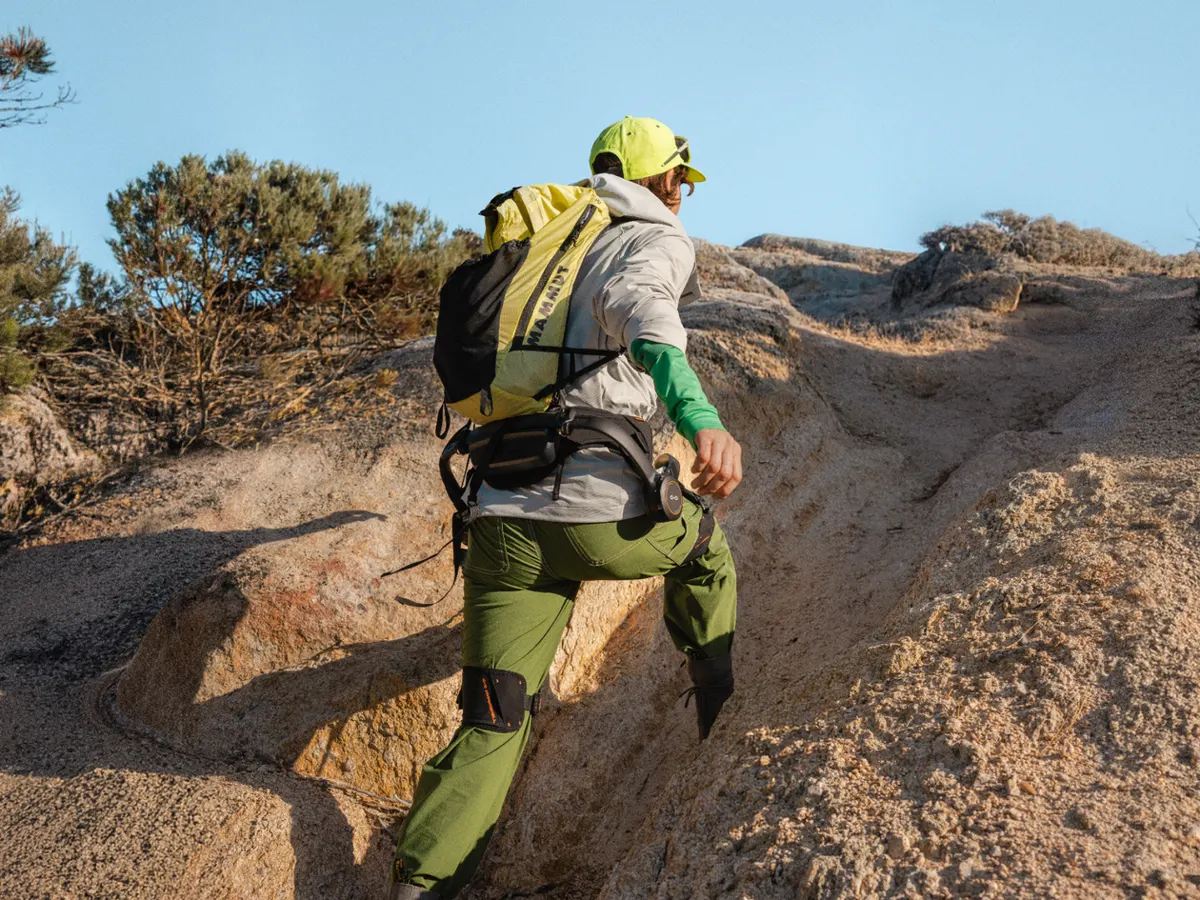 Image: Hypershell
Hypershell X Series
Hypershell · Exoskeletons
- Top speed: 20 km/h
- Hiking, Running, Stairs
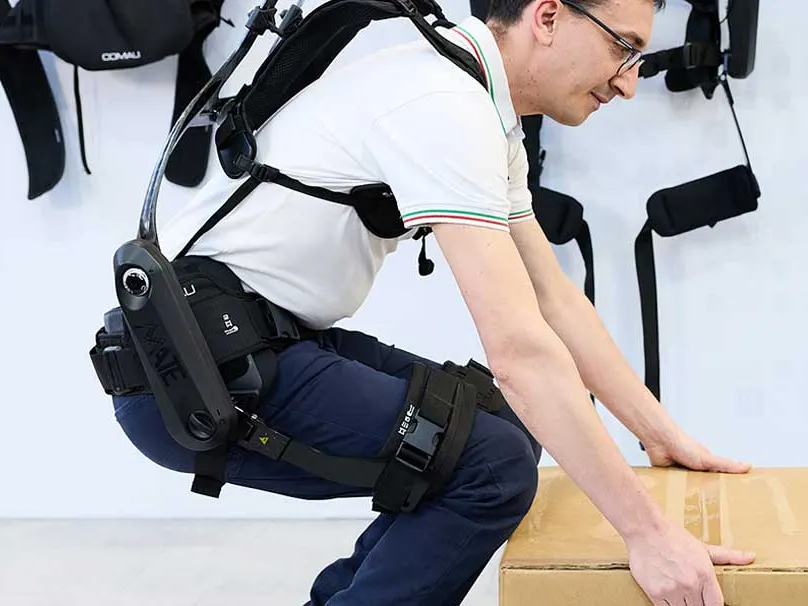 Image: Comau
 Image: Skip
Auxivo EduExo Pro
Auxivo · Switzerland · Exoskeletons
- University teaching, Programming training