
Our top pick in this ranking is the Hypershell X Series from Hypershell: it leads the ranking on Data coverage, Price, Weight. If you want to buy an exoskeleton, choose by use case first: for hiking and leisure, there are motorized hip systems from €999; for trades, logistics and nursing care, back and shoulder systems usually in the low-to-mid four figures; and for rehab, medical walking systems via health insurance. What matters is fit according to the manufacturer's size chart, total weight including battery, realistic battery life, warranty and returns, and, in businesses, a two-week trial with funding from the statutory accident insurer.
- Top of our ranking: Hypershell X Series.
- According to MSRP, leisure exoskeletons for hiking cost €999 to €2,299 in 2026, combo systems with a knee module up to around €4,000.
- Take measurements before buying: Hypershell advises against buying with a BMI under 16 or over 34; 14-day return period.
- Manufacturer ranges apply in eco mode: in mountain mode, Hypershell states 160 minutes, and specialist media report 4 to 7 hours per charge.
- Germany's BG BAU subsidizes exoskeletons at 50% up to €1,500 if instruction and a two-week supervised trial are documented.
- 16 models from 12 manufacturers compared, 13 of them currently available.
- Price range: $79 to $4,500 (prices as of October 18, 2026).
- Cheapest available model: Hypershell X Series from €69.
Our picks at a glance
Our top pick: Hypershell X Series
Range 35 km. Max. 20 km/h. 9 sport modes. Omega system. Leobotics lists USA as country of origin.
Why it's on this list: ranked 1 of 10 in our ranking.
Strengths
- “Cheapest” award
- cheaper than 83% of the models in its category
Keep in mind
- –
Key specs
- Price: €69
- Weight (kg): –
- Data coverage: 42 %
Best value: Dnsys X1
Hip exoskeleton, 894 W motor, 40 Nm per Kickstarter specifications. Foldable, swappable battery, approx. 30 km range (manufacturer claim).
Why it's on this list: ranked 2 of 10 in our ranking.
Strengths
- cheaper than 67% of the models in its category
Keep in mind
- data coverage is still thin (25% of core specs documented)
Key specs
- Price: $689
- Weight (kg): 1.9
- Data coverage: 25 %
Budget pick: Dnsys Z1
Knee exoskeleton, up to 900 W motor power (manufacturer claim). Regenerative braking when walking downhill (KERS). Complements X1 to form a hip-knee system.
Why it's on this list: ranked 5 of 10 in our ranking.
Strengths
Keep in mind
- data coverage is still thin (21% of core specs documented)
Key specs
- Price: $1,299
- Weight (kg): 0.7
- Data coverage: 21 %
Best Weight: Arc'teryx x Skip MO/GO
Powered hiking pants, up to 40% assistance uphill/on stairs. Two swappable batteries, 3+ hours uphill runtime. Not a medical device; reservation with USD 99 deposit.
Why it's on this list: ranked 3 of 10 in our ranking.
Strengths
Keep in mind
- more expensive than 100% of the models in its category
- data coverage is still thin (29% of core specs documented)
Key specs
- Price: $4,500
- Weight (kg): 2
- Data coverage: 29 %
How this ranking works
How this ranking works: only available or pre-orderable models are included. Each model is ranked within the list for each criterion (Data coverage, Price, Weight); missing data counts as the worst value. We don't test robots ourselves but evaluate manufacturer and retailer information.
The specs are based on manufacturer and retailer information; every figure is backed by a source on the model's spec sheet.
Specs compared
| Model | Data coverage (%) | Weight (kg) | Price |
|---|---|---|---|
| 1. Hypershell X Series | 42 | – | €69 |
| 2. Dnsys X1 | 25 | 1.9 | $689 |
| 3. Arc'teryx x Skip MO/GO | 29 | 2 | $4,500 |
| 4. Comau MATE-XB | 33 | – | – |
| 5. Dnsys Z1 | 21 | 0.7 | $1,299 |
| 6. Auxivo EduExo Pro | 25 | – | – |
| 7. Ascentiz H Pro | 21 | – | $1,499 |
| 8. Ascentiz H Ultra | 21 | – | $1,999 |
| 9. Ekso Indego Personal | 21 | 14 | – |
| 10. Trexo Home | 21 | – | – |
Prices as of: October 18, 2026. Prices are manufacturer or retailer information and may vary.
The ranking: top 10
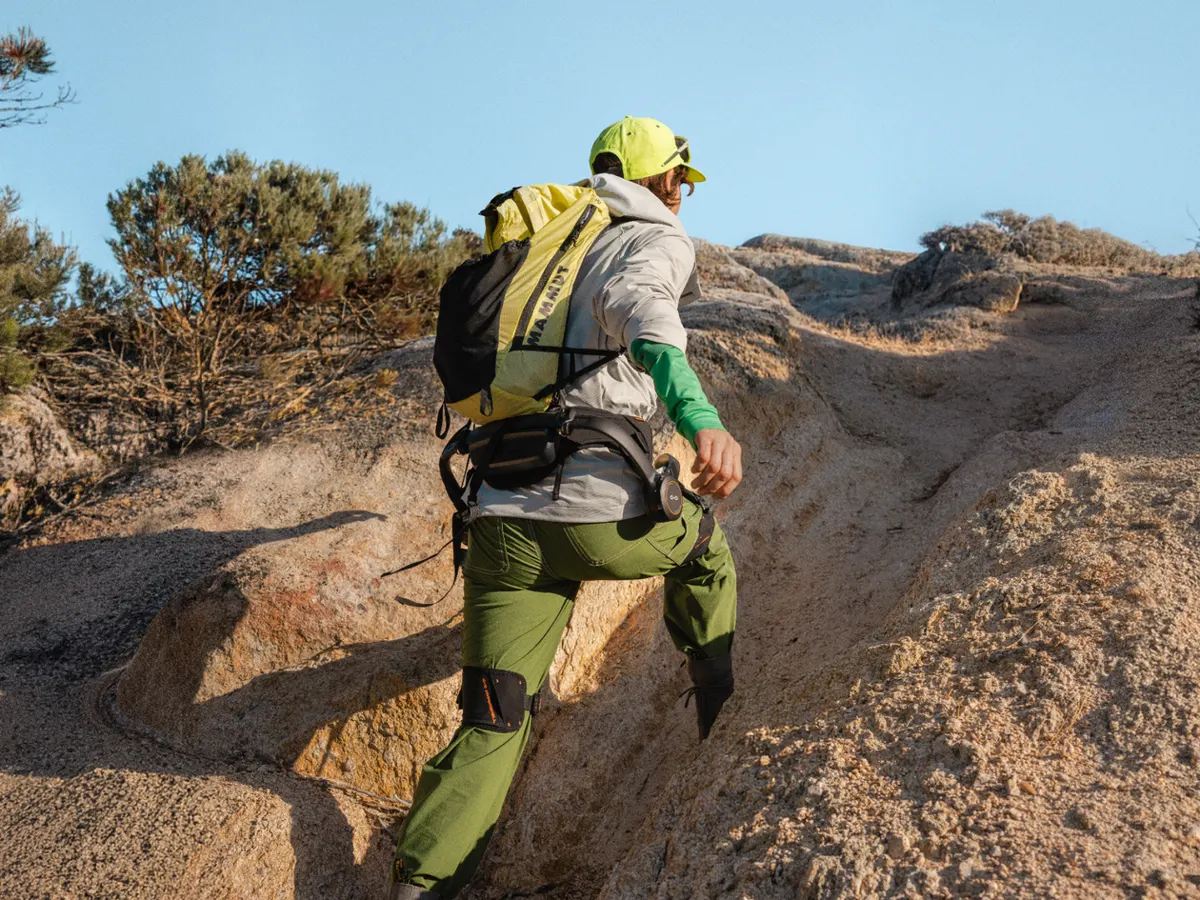 Image: Hypershell
Hypershell X Series
Hypershell · Exoskeletons
- Top speed: 20 km/h
- Hiking, Running, Stairs
 Image: Skip
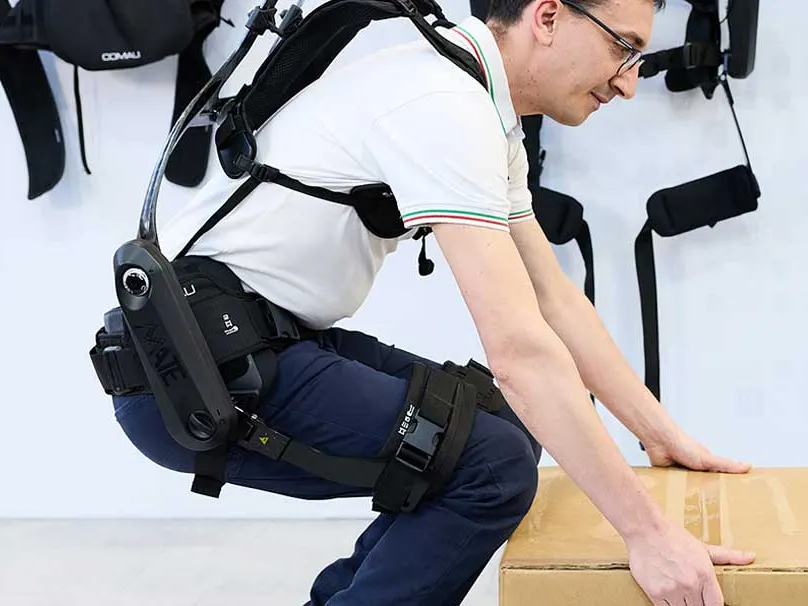 Image: Comau
Auxivo EduExo Pro
Auxivo · Switzerland · Exoskeletons
- University teaching, Programming training
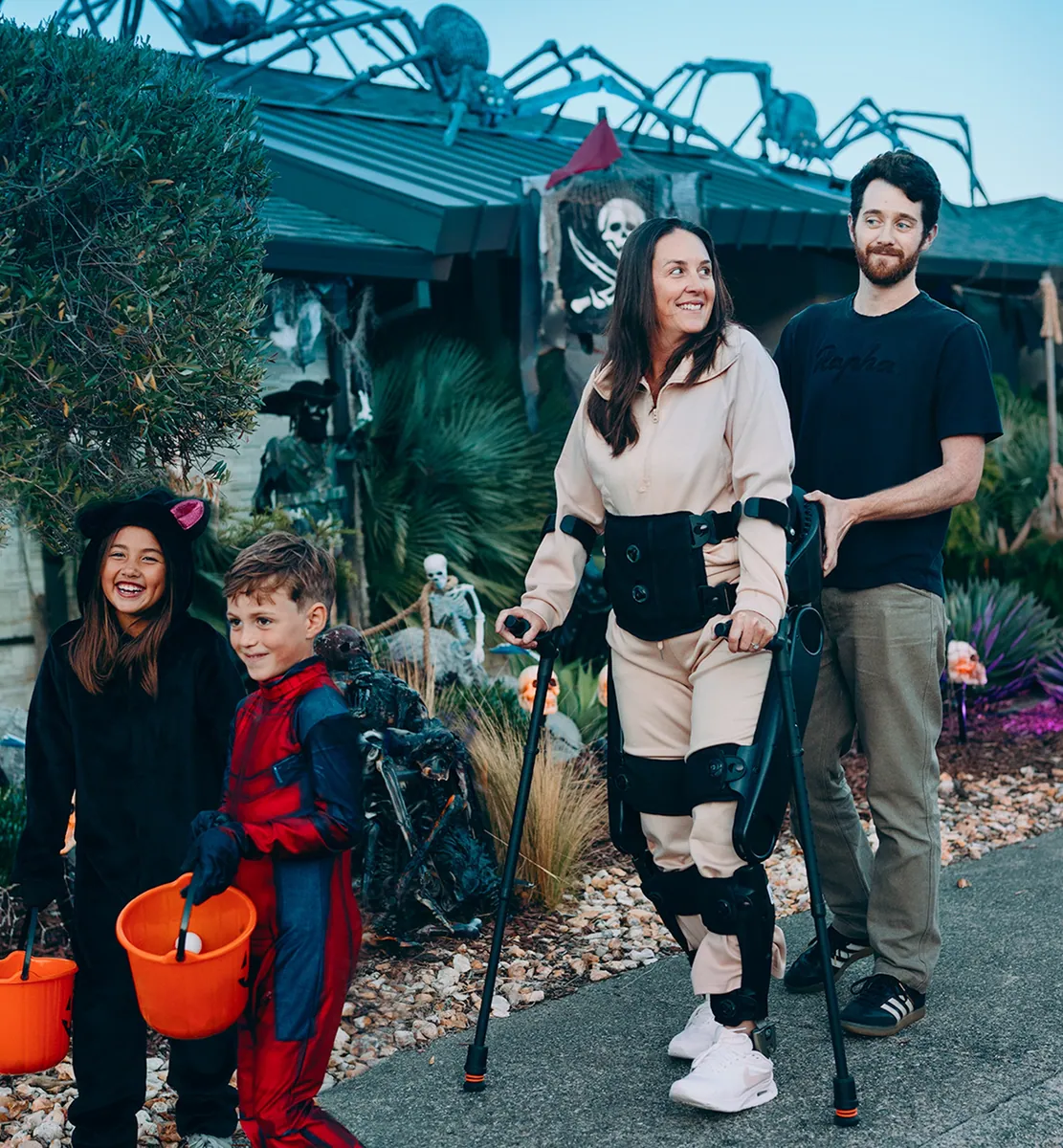 Image: Ekso Bionics
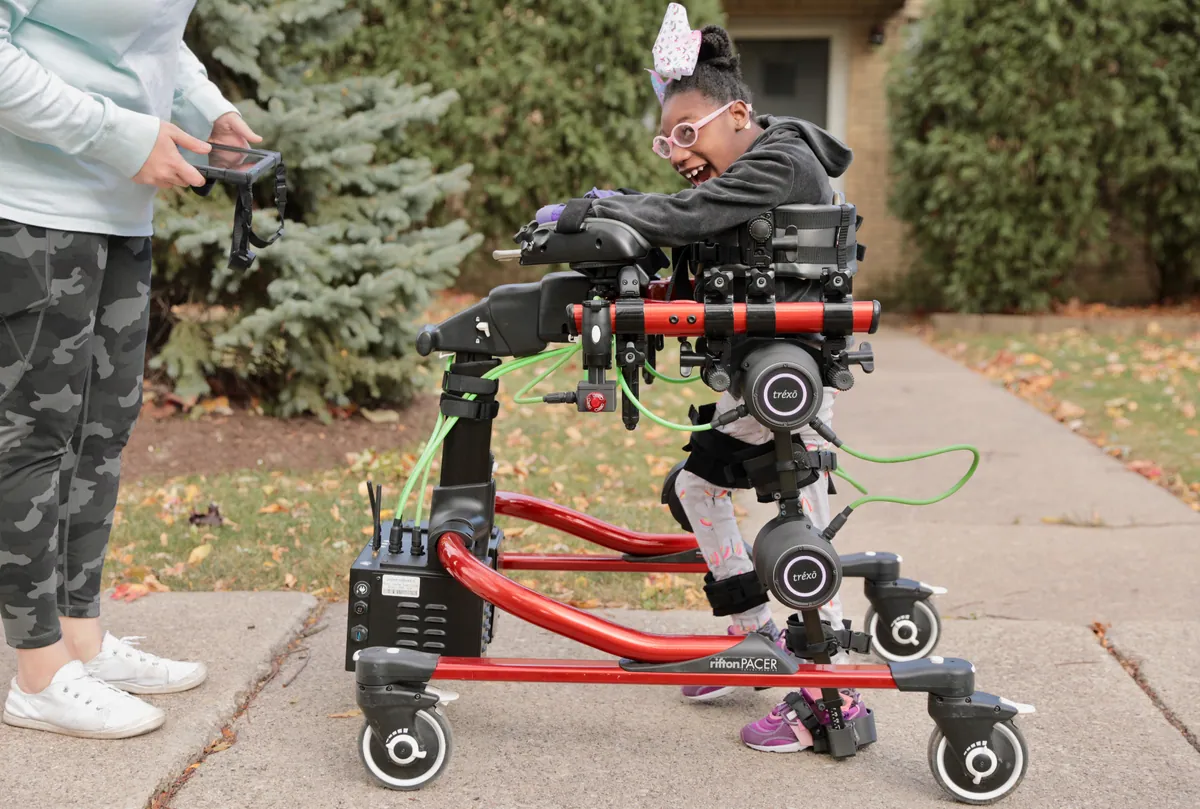 Image: Trexo Robotics
Buying guide
Buying an exoskeleton has never been as easy as in 2026: leisure models for hikers are sold at electronics and sporting goods stores, trade businesses can try on back and shoulder systems at tool dealers, and for people with paraplegia there are supply contracts with health insurers. The decision, on the other hand, is difficult. An exoskeleton for your legs on a hike has little in common with a back exoskeleton for the warehouse or a medical walking system apart from the name: price, weight, buying route and who pays differ by orders of magnitude.
This buying guide helps with exactly this decision. It sorts the model types by target group, gives concrete guideline values for size, battery, weight and support, explains funding from the German statutory accident insurers (Berufsgenossenschaften) and health insurers, and shows when renting or a trial is more sensible than an impulse purchase. We explain the basics of designs and research findings in detail in our general exoskeleton guide. Bot Up Your Life doesn't evaluate devices hands-on; all information comes from manufacturers, authorities, statutory accident insurers and specialist media. As of: October 18, 2026.
Who is an exoskeleton worth it for?
An exoskeleton is worth it when a specific strain recurs regularly and can't easily be avoided. The more clearly this strain can be described, the easier it is to find the right device. Four target groups are actually buying today:
- Hiking and leisure: People who go on longer tours with lots of elevation gain, want to get back into the mountains after an injury or break, or travel with a heavy backpack. Motorized hip systems weighing 1.6 to 2.6 kilograms dominate here.
- Trades and logistics: Employees who work overhead every day, lift boxes from the floor or stand bent forward for long periods. The purchase is usually made by the employer, often with a subsidy from the statutory accident insurer.
- Nursing care: Hospitals and care facilities where patients are mobilized and transferred. Motorized back systems are mainly used here.
- Rehab and medicine: People with paraplegia, for whom motorized walking systems can make standing and walking with forearm crutches possible. This is supplied via a doctor, therapy team and health insurer, not a normal purchase.
An exoskeleton isn't worth it if the strain only occurs occasionally, if a lifting aid or height-adjustable table would solve the problem, or if you expect a leisure device to act as therapy for joint problems. Leisure exoskeletons are expressly not medical devices.
What exoskeleton types are there for which target group?
For the purchase decision, the target group is more important than the technology. The following overview classifies the models in our database:
- Hip systems for hiking and leisure: A belt with battery and motors sits at the hip, and two arms rest against the thighs. Examples include the Hypershell X Series, the Dnsys X1 and the Ascentiz H Pro and H Ultra. They mainly provide support uphill and on stairs, and some models now also brake downhill.
- Knee and full-leg systems: Knee modules such as the Dnsys Z1 or the powered hiking pants Arc'teryx x Skip MO/GO also target the descent, where many hikers feel it in their knees. The Hypershell Halo powers the hip and knee together. So if you're looking for an exoskeleton for your legs, first clarify whether the ascent or the descent is the main problem.
- Back systems for logistics, production and nursing care: Passive models such as the Comau MATE-XB work with springs, while motorized systems such as the German Bionic Apogee or the Ottobock IX Back Volton use a battery. If you're looking for a back exoskeleton, this is the right design.
- Shoulder systems for trades and assembly: For overhead work in drywall construction, electrical installation or vehicle assembly – passive, for example from Hilti or Ottobock, or active, for example from Festool.
- Medical walking systems: The Ekso Indego Personal, the Lifeward ReWalk 7 Personal, the Trexo Home for children and the self-balancing Wandercraft Eve belong in the hands of hospitals and therapy teams.
There are also learning and research kits such as the Auxivo EduExo Pro, which don't relieve strain but help with understanding and programming.
The key buying criteria for an exoskeleton
1. Fit and size. An exoskeleton that slips or pinches stays in the closet. Germany's Federal Institute for Occupational Safety and Health (BAuA) names fit and adjustability as a key factor for acceptance. Before purchase, Hypershell has customers measure their height, weight, waist circumference at navel height, hip width and thigh length from the hip joint to the outer knee bone. If the measurements fall outside the table, the manufacturer's rule of thumb is a BMI of 16 to 34; below or above that, Hypershell advises against buying. For medical walking systems, the limits are narrower: according to Ekso Bionics, the Indego Personal is designed for a height of about 1.55 to 1.90 meters.
2. Weight. For leisure devices, the total weight including the battery counts, not the frame weight. Hypershell states a net weight of 1.7 to 1.8 kilograms for the S generation, but 2.5 to 2.6 kilograms with the battery. For the Hypershell Halo, the manufacturer states a frame weight of 2.6 kilograms. Motorized back systems are significantly heavier: Ottobock states 4.8 kilograms for the IX Back Volton, and the Hilti EXO-S shoulder system weighs 2.4 kilograms according to the manufacturer. Medical walking systems such as the Indego Personal weigh around 14 kilograms. As a guideline: for day hikes, a hiking exoskeleton should ideally stay under three kilograms.
3. Battery and range. Manufacturer figures are usually determined in the most economical mode. Hypershell states up to 30 kilometers or 7.5 hours of walking per charge, but only up to 160 minutes or 13.8 kilometers in mountain mode. Outdoor-Magazin achieved 4 to 7 hours per charge with the X Ultra S, depending on the terrain, and fast charging took around 1.5 hours. A British specialist magazine reported only around 70 minutes on the mountain with the Dnsys X1 Carbon in its powerful mode. A second, swappable battery is therefore almost a must for long tours. In the trades, it's worth looking at the battery system: Festool and Ottobock use batteries from existing 18-volt tool platforms, and Ottobock states up to eight hours of runtime.
4. Traveling with a battery. If you're flying on vacation with your exoskeleton, check the watt-hours. According to the German Federal Aviation Office (Luftfahrt-Bundesamt), lithium batteries may have a maximum of 100 watt-hours, or up to 160 watt-hours with the airline's approval; loose spare batteries must go in carry-on baggage only. At 72 watt-hours, the Hypershell batteries are below this. You should still ask the airline beforehand, as it may have stricter rules.
5. Robustness. For hiking and construction sites, at least IP54 should be specified, i.e. protection against dust and splashing water. Hypershell states IP54 and an operating range of minus 20 or minus 10 to plus 60 degrees. Comau describes the MATE-XB as weatherproof, even in salty environments.
6. Operation. Small details make the difference in everyday use: can you change the mode while wearing gloves, do you need your smartphone for settings, how quickly can the device be put on and taken off? Outdoor-Magazin criticized the single-button operation of the X Ultra S as tedious with cold fingers, and the bulky stowing on the go.
7. Support, warranty and returns. Hypershell states a 12-month manufacturer's warranty and a 14-day return period. Regardless of this, the statutory warranty applies when buying from a retailer in the EU. For direct imports from China or the US, spare parts, repair routes, customs and a German-language manual should be clarified in advance. For businesses, a German-language operating manual and CE marking are a prerequisite for BG BAU funding anyway.
Buying an exoskeleton: fitting, size and trial period
Trying it on is more important with an exoskeleton than with almost any other device. For the leisure sector:
- Take your measurements according to the manufacturer's table before ordering, and ask support if you're at the limits.
- Try it on in a store if possible. According to the manufacturer, Hypershell is sold through Decathlon and Digitec Galaxus, among others.
- Use the 14-day return period for a real local route with an incline, not just a walk on flat ground.
- Try it with the clothes you'll wear later and with a backpack, because the hip belt can clash with the backpack strap.
In businesses, a trial at the actual workplace is standard. For its funding, the BG BAU (the statutory accident insurer for the construction industry) requires professional instruction and a two-week supervised trial at the workplace, which the provider must confirm in writing. According to Handwerksblatt (October 2026), Ottobock offers its exoskeletons through more than 90 Würth branches, with over 100 planned by the end of 2026. Personal advice and fittings are available there.
In nursing care, exoskeletons usually start out as a pilot. The Fachklinik Enzensberg, for example, used two exoskeletons on neurological wards in 2025, mainly for transfers between bed and wheelchair; measured results were not yet available at the time of the announcement. Facilities should therefore start with a few devices, clearly defined tasks and feedback from nursing staff.
How much does an exoskeleton cost? Price ranges in 2026
If you're looking for exoskeleton prices, first decide on the class. The following prices are documented list or manufacturer prices with dates:
- Entry-level leisure (under €1,200): Hypershell X Pro S for €999 (European MSRP, July 2026). At times, retailers offered promotional prices well below this. For the Dnsys X1, a specialist magazine quotes $999 for the Lite version (June 2026); our dataset lists an entry price of $689. We did not have euro prices for Dnsys.
- Mid-range leisure (€1,200 to €2,500): Hypershell X Max S for €1,499 and X Ultra S for €1,999, Ascentiz H Pro for €1,599 and H Ultra for €2,299, and the hip-knee drive Hypershell Halo for €2,299. The Dnsys Z1 is listed in our dataset at $1,299.
- Premium leisure (over €2,500): Ascentiz combo packages with a knee module up to €3,999, and the MO/GO hiking pants at $4,500 to $5,000 according to the manufacturer, currently available for pre-order only.
- Trades and industry (usually €2,000 to €5,000): For the Festool ExoActive, Handwerksblatt quoted an expected €2,800 net at launch; for the Ottobock Shoulder, a list price of €4,900 was reported in 2022. Comau, German Bionic and many others only quote prices on request.
- Medical walking systems (five to six figures): Since 2024, US health insurer Medicare has paid a flat rate of $91,032 for personal exoskeletons such as the Indego Personal.
Our dataset lists a range of €69 to €2,889 for the Hypershell X Series; the lower end refers to accessories, the upper end to bundles. So always compare equivalent configurations, for example with or without a second battery.
Funding: will the statutory accident insurer or health insurer pay?
Statutory accident insurer (Berufsgenossenschaft): Since July 1, 2025, the BG BAU has been funding back and shoulder exoskeletons as part of its occupational safety bonuses. According to Handwerksblatt and sales partners, the subsidy amounts to 50 percent of the costs, up to a maximum of €1,500 per exoskeleton and measure. According to the BG BAU information sheet (as of September 23, 2026), the prerequisites are CE marking, a German-language operating manual, instruction and the two-week supervised trial with written confirmation. The purchase is also funded if the device remains in the business after the trial. According to the BG BAU, carrying aids and backpack systems, for example, are not eligible. We were unable to verify whether other statutory accident insurers, for example for retail, logistics or nursing care, have comparable programs; businesses should ask their own insurer directly.
Health insurer: Health insurers don't pay for leisure and work devices. For motorized walking systems for paraplegia, coverage is possible. The process follows the normal medical aids procedure, as described by Germany's consumer advice centers (Verbraucherzentrale):
- A medical prescription stating the medical necessity, ideally with the number from the German medical aids directory (Hilfsmittelverzeichnis).
- A written application to the health insurer.
- Review by the insurer and designation of the service provider.
- Instruction and training with therapists and orthopedic technicians.
The ReWalk Personal has been listed in the German medical aids directory since 2018. According to Lifeward, it has contracts with several large health insurers that together cover around 45 percent of people with statutory health insurance. Nevertheless, decisions are always made on a case-by-case basis. This section is not legal or medical advice.
Rent, lease or buy?
Buying is worth it if use is regular and long-term. In three cases, renting or trialing is smarter:
- Uncertainty about the benefit: In businesses, the two-week trial is part of the BG BAU funding anyway and should precede any purchase.
- Seasonal use: If you only hike on vacation, take the return period seriously or ask about rental offers. Skip temporarily rented out MO/GO for $80 in parts of the US and Canada. As of October 18, 2026, we were unable to identify an established, nationwide rental service for leisure exoskeletons in Germany.
- Many devices in a business: For larger quantities, some industrial providers offer rental or service models. We found no public monthly prices; historically, Sarcos quoted around $9,000 per month in rent for its full-body system in 2021, an offer that is no longer available. Terms, maintenance and replacement devices should be set out in the contract.
Hypershell reviews: what specialist media report
Because Hypershell is the best-known brand, many people look for reviews of Hypershell. We haven't tried the device ourselves, but we summarize what specialist media report. Positive points highlighted include the low weight, the high-quality build, the braking support downhill and the fine adjustability. According to Outdoor-Magazin, criticisms include the packed size of a small rolling suitcase, the awkward removal and stowing on the go, the single-button operation and an AI terrain detection that needs a few steps to adjust. Netzwelt reported that, contrary to the manufacturer's original recommendation, the device could also be worn with shorts without chafing, but that it stands out clearly in public. The advertised percentage figures for strain relief still come from manufacturer and commissioned measurements.
Safety, law and data privacy
For leisure devices: they are not medical devices. If you have cardiovascular disease, a pacemaker, osteoarthritis or circulatory disorders, you should get medical clearance before use. Downhill, on wet rock and in crowds, you should turn down the support until you know how the device behaves.
In businesses, an exoskeleton is a lower-priority personal protective measure. Before buying, a risk assessment and an examination of technical alternatives come first. For motorized devices, the new EU Machinery Regulation applies from January 20, 2027. When buying, businesses should make sure that manufacturers confirm conformity for this cutoff date.
Many leisure and care devices are connected via an app and record movement data. In businesses, this data can allow conclusions to be drawn about employees' performance and health. Before introduction, data protection, storage location and, where applicable, the co-determination rights of the works council should be clarified.
Care, maintenance and running costs
Exoskeletons incur fewer running costs than many robotic devices, but not none:
- Batteries: Lithium batteries age. The price and availability of a replacement or second battery should be known before purchase. If you already own tool batteries from a system, you'll save with Festool or Ottobock.
- Padding and textiles: Straps and padding absorb sweat. For the Apogee+ in nursing care, the trade press mentions washable textiles and IP54. For leisure devices, it's worth checking whether padding is removable and available separately.
- Software: Apps and firmware updates improve control and modes, but require the manufacturer to maintain support. With very young brands, this is a risk.
- Training: In businesses, there's instruction, briefing and the trial. The BG BAU funding subsidizes exactly this part.
- Repairs: Hypershell states a 12-month warranty. Ask before buying how repairs are handled after it expires and what spare parts cost.
Common mistakes when buying an exoskeleton
- Buying without a clear purpose. A hiking exoskeleton doesn't help with lifting, and a back system doesn't help with overhead work.
- Only looking at range. The lab figure of 30 kilometers shrinks significantly in mountain mode; specialist media report 70 minutes to 7 hours depending on the device and mode.
- Ordering without trying it on. Check measurements and BMI limits beforehand and use the return period for a real tour.
- Confusing net weight with total weight. The battery quickly adds 0.8 kilograms.
- Forgetting the descent. If your knee problems are mainly downhill, you need a device with braking support or a knee module.
- Direct import without clarifying support. Warranty, spare parts and repair routes have to work in the EU.
- Giving away funding in a business. If you buy without a supervised trial, you lose your entitlement to the BG BAU subsidy.
- Taking manufacturer percentages for independent measurements. Independent studies usually show smaller effects in everyday use than the advertising.
Conclusion
If you want to buy an exoskeleton, decide on the target group first and only then on the model. For hiking and leisure, motorized hip systems are widely available from €999; what matters is fit, a total weight under three kilograms, a second battery and a return period that you use for a real tour. For trades and logistics, the path leads through a risk assessment, a two-week trial and funding from the statutory accident insurer, which amounts to up to €1,500 at the BG BAU. In nursing care, pilot projects with a few devices are the sensible start. And for people with paraplegia, an exoskeleton isn't an off-the-shelf product but a medical aid applied for via prescription and health insurer. If you know your needs, try it on extensively and read manufacturer figures soberly, you'll make a good purchase decision in 2026.
Frequently asked questions
Where can you buy an exoskeleton?
Leisure exoskeletons such as Hypershell are available directly from the manufacturer and, according to the manufacturer, from Decathlon and Digitec Galaxus, among others. Industrial exoskeletons are usually sold through specialist dealers or after a consultation; according to Handwerksblatt (October 2026), Ottobock models are also sold through Würth branches. Medical walking systems are supplied via a doctor, therapy team and health insurer.
How much does an exoskeleton for the legs cost?
According to 2026 MSRPs, motorized hip exoskeletons for hiking cost between €999 (Hypershell X Pro S) and €2,299 (Ascentiz H Ultra, Hypershell Halo). Combinations with a knee module cost up to €3,999, and the MO/GO hiking pants $4,500 to $5,000.
Is an exoskeleton worth it for hiking?
It can make sense for people who cover a lot of elevation, carry a heavy backpack or are returning after an injury. The advertised strain-relief figures have so far come from the manufacturer, so you should use the return period for a real tour with an incline.
What size do I need for Hypershell?
Hypershell has you measure your height, weight, waist circumference, hip width and thigh length and compare them with a size chart. If your measurements fall outside it, a BMI of 16 to 34 serves as a rule of thumb; above or below that, the manufacturer advises against buying.
What do specialist media report about Hypershell?
Specialist media praise the low weight of around 2.5 kilograms including battery, the build quality and the braking support downhill. Criticisms include the packed size, single-button operation and terrain detection that needs a few steps to adjust; according to Outdoor-Magazin, battery life was 4 to 7 hours.
Which exoskeleton helps with the back?
For lifting and bending, there are passive back systems with springs such as the Comau MATE-XB and motorized systems such as the German Bionic Apogee or Ottobock IX Back Volton. In businesses, lifting aids take priority, and a risk assessment and trial are mandatory or a prerequisite for funding.
Will health insurance or the statutory accident insurer pay for an exoskeleton?
Health insurers only pay for medical walking systems, for example for paraplegia, with a prescription and a case-by-case review. The BG BAU funds work exoskeletons for the back and shoulder at 50 percent up to a maximum of €1,500; nobody subsidizes leisure devices.
Can I take an exoskeleton on a plane?
According to the German Federal Aviation Office, lithium batteries up to 100 watt-hours are allowed, up to 160 watt-hours with the airline's approval; spare batteries go in carry-on baggage. Hypershell batteries have 72 watt-hours, but you should still ask the airline beforehand.
Buying guide sources
- Hypershell: Datenblatt X Pro S, Max S, Ultra S (Gewicht, Akku, Garantie, Rückgabe) (hypershell.tech)
- Hypershell: Größentabelle und Messanleitung (eu.hypershell.tech)
- Hypershell: X-Serie in Europa, UVP und Händler (uk.hypershell.tech)
- Outdoor-Magazin: Hypershell X Ultra S beim Wandern (outdoor-magazin.com)
- Netzwelt: Exoskelett ausprobiert – was man vorher wissen sollte (netzwelt.de)
- Wareable: Dnsys X1 Preise und Akkulaufzeit (wareable.com)
- Ascentiz: Euro-Preise H- und K-Serie (laragione.eu)
- Luftfahrt-Bundesamt: Elektronische Geräte mit Lithium-Batterien (lba.de)
- BG BAU: Arbeitsschutzprämie Exoskelette – Anforderungen (bgbau.de)
- Handwerksblatt: Ottobock und Würth, BG-BAU-Zuschuss 50 % bis 1.500 Euro (handwerksblatt.de)
- Bayerisches Ärzteblatt: Exoskelette in der Pflege (Apogee+, PFLEXO) (bayerisches-aerzteblatt.de)
- Fachklinik Enzensberg: Exoskelette in der Pflege (enzensberg.de)
- Verbraucherzentrale NRW: Hilfsmittel beantragen (verbraucherzentrale.nrw)
- Lifeward: CE für ReWalk 7, Kassenverträge (nasdaq.com)
- Skip: FAQ MO/GO (skipwithjoy.com)
Related guide: Exoskeletons 2026: Types, Prices, Studies and Buying Guide