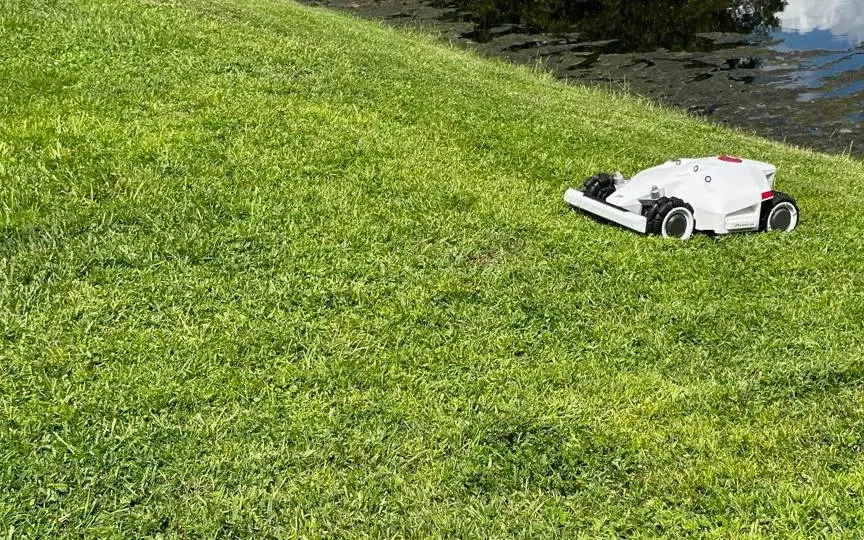
Our top pick in this ranking is the Husqvarna Automower 430V NERA from Husqvarna: it leads the ranking on Area coverage, Data coverage, Price. Which robotic lawn mower without a boundary wire is right depends mainly on your yard: for small, clearly defined areas, camera or RTK models from around €650 MSRP are enough; slopes require all-wheel drive, and yards with trees need LiDAR or combined systems. In addition to area and slope, pay attention to running costs for cellular data, the warranty terms and the service route in Germany.
- Top of our ranking: Husqvarna Automower 430V NERA.
- Area ratings apply to ideal conditions: plan for 20 to 30 percent reserve, more in yards with many obstacles.
- All-wheel drive pays off from about 35 to 40 percent incline; also check the often much lower slope rating at the lawn edge.
- Under trees and close to the house, pure RTK becomes unreliable; LiDAR or combined models with a camera are more robust there.
- Manufacturer warranties range from 2 to 3 years, often shorter for batteries; watch out for registration deadlines of 30 to 90 days.
- 28 models from 8 manufacturers compared, 26 of them currently available.
- Price range: $999 to $9,216 (prices as of October 18, 2026).
- Cheapest available model: Segway Navimow i206 AWD from $999.
Our picks at a glance
Our top pick: Husqvarna Automower 430V NERA
AI vision camera, wire-free EPOS satellite navigation. Up to 4,800 m², slope 50%. 24 cm cutting width, 46 dB(A), IPX5. Available per retailer from Dec. 2026.
Why it's on this list: ranked 1 of 10 in our ranking.
Strengths
- area coverage of up to 4,800 m² (more than 70% of the category)
Keep in mind
- more expensive than 85% of the models in its category
Key specs
- Area coverage (m²): 4,800
- Price: €4,415
- Data coverage: 50 %
Best value: Mammotion YUKA mini 2 500
Wire-free, camera AI (300+ obstacles), no RTK mast. Up to 500 m², slope up to 45%. DropMow mode without prior mapping. Drop protection at stairs/pool edge.
Why it's on this list: ranked 8 of 10 in our ranking.
Strengths
- cheaper than 88% of the models in its category
Keep in mind
- data coverage is still thin (38% of core specs documented)
Key specs
- Area coverage (m²): 500
- Price: €899
- Data coverage: 38 %
Budget pick: Mammotion LUBA mini 2 AWD 1000
All-wheel drive, slope up to 80% (test: approx. 70%). Triple-camera AI vision + NetRTK. Main mower deck 20 cm + edge mower deck 12 cm. Up to 1,000 m², 6.1 Ah battery.
Why it's on this list: ranked 2 of 10 in our ranking.
Strengths
- cheaper than 64% of the models in its category
Keep in mind
- –
Key specs
- Area coverage (m²): 1,000
- Price: €1,499
- Data coverage: 46 %
Best Area coverage: Husqvarna Automower 540 EPOS
Professional model for 4,000-8,000 m² (4,000 m² in 24 hrs). EPOS satellite navigation (RTK GNSS), no boundary wire. Radar + AI camera with IR night vision. Slope up to 50% (27°).
Why it's on this list: ranked 10 of 10 in our ranking.
Strengths
- area coverage of up to 8,000 m² (more than 90% of the category)
Keep in mind
- more expensive than 97% of the models in its category
- data coverage is still thin (33% of core specs documented)
Key specs
- Area coverage (m²): 8,000
- Price: €5,499
- Data coverage: 33 %
How this ranking works
How this ranking works: only available or pre-orderable models are included. Each model is ranked within the list for each criterion (Area coverage, Data coverage, Price); missing data counts as the worst value. We don't test robots ourselves but evaluate manufacturer and retailer information.
The specs are based on manufacturer and retailer information; every figure is backed by a source on the model's spec sheet.
Specs compared
| Model | Area coverage (m²) | Data coverage (%) | Price |
|---|---|---|---|
| 1. Husqvarna Automower 430V NERA | 4,800 | 50 | €4,415 |
| 2. Mammotion LUBA mini 2 AWD 1000 | 1,000 | 46 | €1,499 |
| 3. Mammotion LUBA 3 AWD 1500 | 1,500 | 46 | €2,699 |
| 4. Mammotion LUBA mini 2 AWD 1500 | 1,500 | 38 | €1,899 |
| 5. Segway Navimow X450 | 5,000 | 33 | $2,999 |
| 6. Segway Navimow X430 | 3,000 | 33 | $2,499 |
| 7. Segway Navimow X330 | 3,000 | 33 | $2,799 |
| 8. Mammotion YUKA mini 2 500 | 500 | 38 | €899 |
| 9. Segway Navimow X315 | 1,500 | 33 | $2,299 |
| 10. Husqvarna Automower 540 EPOS | 8,000 | 33 | €5,499 |
Prices as of: October 18, 2026. Prices are manufacturer or retailer information and may vary.
The ranking: top 10
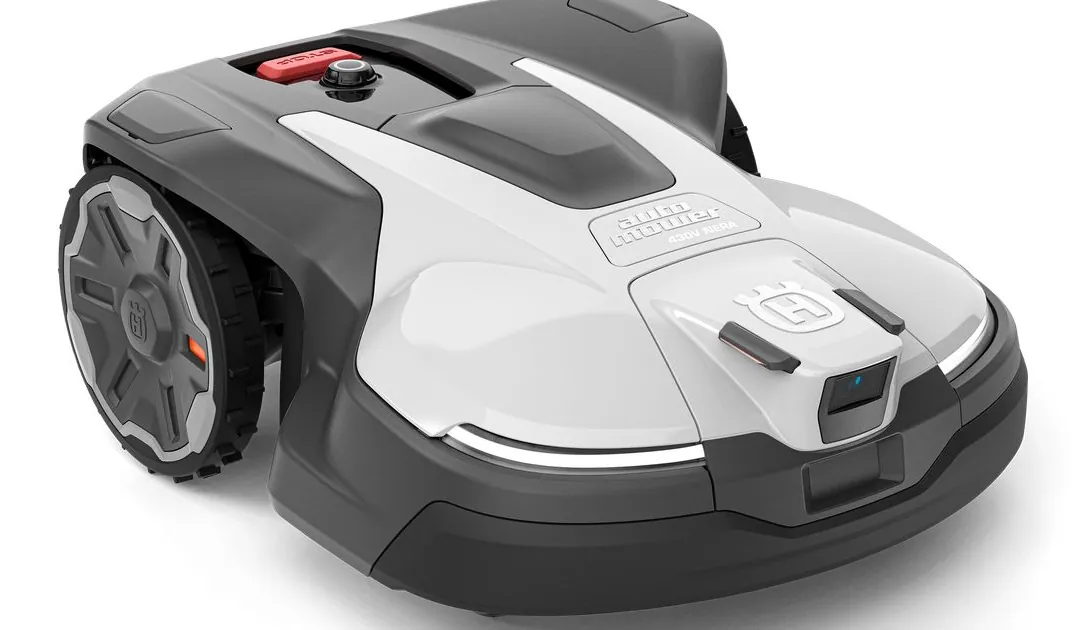 Image: Husqvarna
Husqvarna Automower 430V NERA
Husqvarna · Sweden · 2026 · Lawn mowers
- Noise level: 56 dB
- Battery: 5,000 mAh
- Weight: 15 kg
Mammotion LUBA mini 2 AWD 1000
Mammotion · China · 2026 · Lawn mowers
- Noise level: 55 dB
- Battery: 6,100 mAh
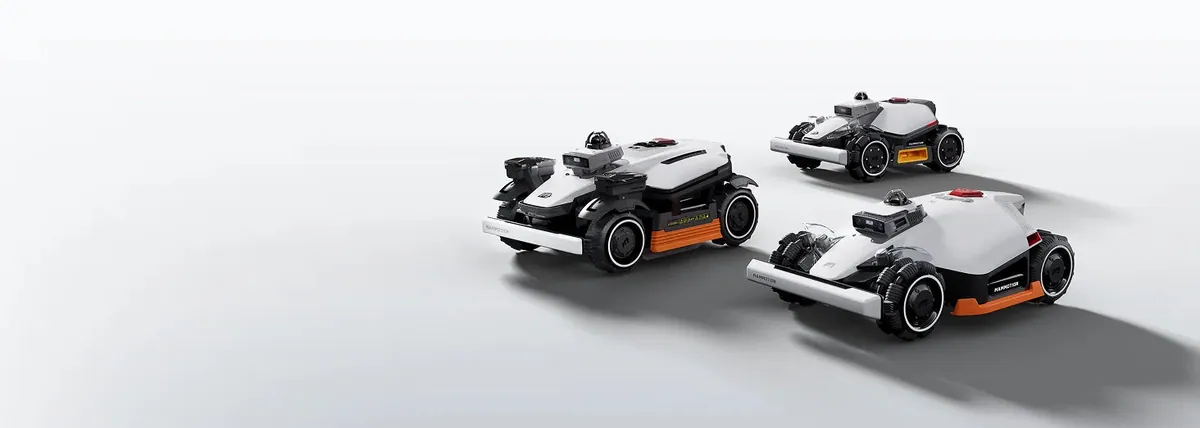 Image: Mammotion
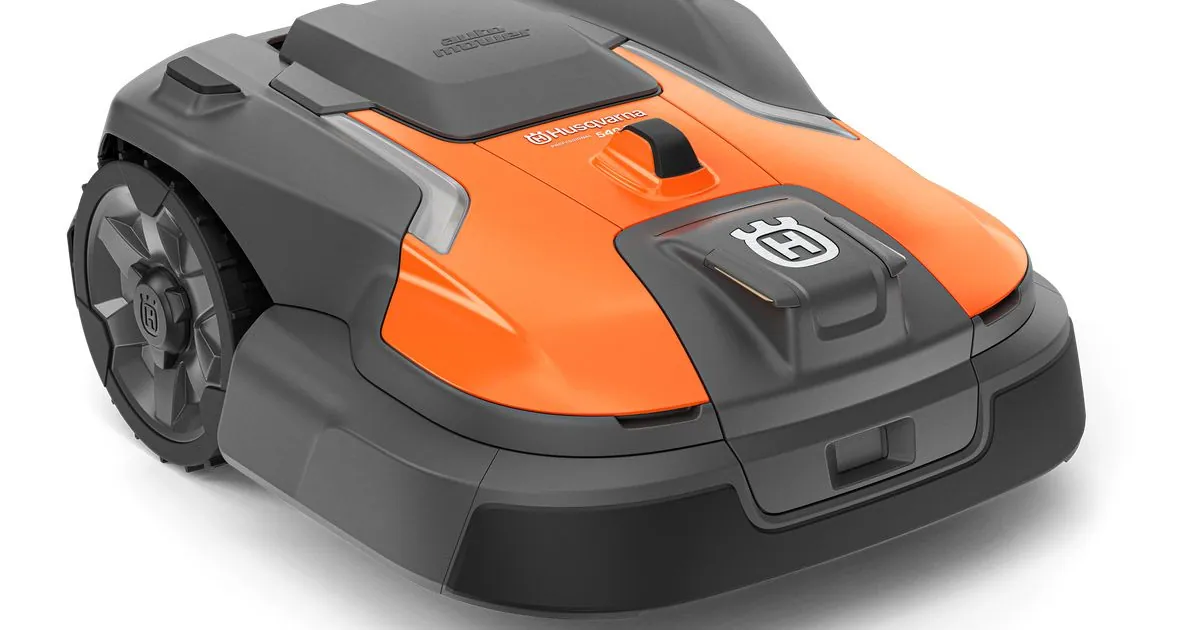 Image: Husqvarna
Buying guide
If you buy a robotic lawn mower without a boundary wire in 2026, you can choose between a good dozen brands, three navigation principles and prices from around €500 to over €5,000. The technology itself is mature enough that the real question is no longer whether a wire-free mower works, but which one suits your yard. A model that works flawlessly on an open lawn behind the house can fail in a cramped front yard under old fruit trees.
This buying guide complements our best-of list. It helps you narrow down the selection by type of yard, puts the most important brands and systems into context and shows which costs arise after the purchase, from network RTK and cellular data to warranty and service in Germany. We explain in detail how RTK, cameras and LiDAR work technically in our guide to robotic lawn mowers without a boundary wire; here, the focus is on the purchase decision.
Who is a robotic lawn mower without a boundary wire worth it for?
A wire-free robotic mower is worth it above all for three groups:
- First-time buyers who want to avoid laying wire along all the lawn edges. Instead of a weekend with a spade and pegs, setup via the app usually takes one to two hours.
- People switching over whose boundary wire has broken after years or whose yard is being redesigned. Virtual boundaries can be moved in the app at any time, and a new flower bed doesn't mean re-laying the wire.
- Owners of large or multi-part properties, where a wire would be very long. Wire-free models usually mow in straight lines and therefore progress faster on large areas than a random-pattern mower.
A wire-free model is less suitable if your yard offers neither usable satellite reception nor clear visual edges – for example, a narrow lawn surrounded by tall trees and houses that blends seamlessly into a meadow. Here, a classic wire-guided mower can be the more reliable and cheaper solution.
Robotic mowers for small yards: what works up to 500 m²?
For small yards, such as a robotic mower without a boundary wire for 200 m², the market has become significantly cheaper since 2025. In this class, there are mainly three approaches:
- Camera-only models such as the Mammotion YUKA mini 2 500 (up to 500 m², slopes up to 45 percent according to the manufacturer) or the Worx Landroid Vision S250 (up to 250 m²). They don't need an antenna or a satellite connection, but require clearly visible lawn edges.
- Affordable RTK models with a camera such as the Ecovacs GOAT O600 RTK (up to 600 m²). They respect virtual boundaries even where the lawn visually transitions into gravel or paving, but require open sky.
- Small all-wheel-drive models such as the Segway Navimow i205 AWD (up to 500 m²), which make sense if the small yard is also steep.
For areas of around 200 to 300 m², almost any entry-level model is technically sufficient. What matters more here is the width of passages, the number of sub-areas and whether the robot mows cleanly enough at the edges, because with small lawns, the unmowed edge strip makes up a large percentage. At this size, don't reflexively buy the model with the largest area rating: more capacity usually means more weight, larger mowing decks and a higher price, without you benefiting from it.
Medium and large yards: what matters from 500 m²?
Most single-family home yards are between 500 and 1,500 m². Here, it's worth paying attention to area reserve and cutting width. A mowing deck with a width of 20 centimeters, as on the Mammotion LUBA mini 2 AWD 1000, takes noticeably longer for the same area than a device with 40 centimeters, as Mammotion states for the LUBA 3 AWD or Dreame for the A3 AWD Pro. If you only let the robot run during the day because of quiet hours or to protect hedgehogs, you have a limited time window; then area coverage per hour counts more than the maximum rating.
From about 1,500 m², the class of large yards begins. Two cutting discs, larger batteries and all-wheel drive are typical here. Examples with manufacturer specifications:
- Segway Navimow X430 and X450: up to 3,000 and 5,000 m² respectively, 43-centimeter cutting width.
- Husqvarna Automower 430V NERA: up to 4,800 m² in systematic mowing mode, up to 3,200 m² in irregular mode.
- Ecovacs GOAT A3000 LiDAR PRO: up to 3,000 m² with dual LiDAR.
- Dreame A3 AWD Pro: announced in 3,500 and 5,000 m² versions.
The Husqvarna example shows how much area ratings depend on the mowing mode. There, the smaller figure is a third below the larger one. So for yards with many obstacles, allow for at least 20 to 30 percent reserve. For areas from 4,000 m², such as company premises or hotels, there are professional models such as the Husqvarna Automower 540 EPOS (4,000 to 8,000 m²), which are usually oversized for private yards.
Slopes, trees, multiple zones: which technology for difficult yards?
Slopes: From about 35 to 40 percent incline, you should consider a robotic mower with all-wheel drive. For comparison: 50 percent corresponds to around 27 degrees, 80 percent to around 39 degrees. All-wheel-drive models such as the Mammotion LUBA series (up to 80 percent according to the manufacturer), the Segway Navimow X4 series (up to 84 percent) or the Dreame A3 AWD Pro (up to 80 percent) are built for such properties. One frequently overlooked point: lower values often apply at the lawn boundary. Husqvarna states 50 percent within the area for the 430V NERA, but only 25 percent at the boundary. If the steepest spot in your yard is right at the edge, this second value is decisive.
Trees and shading: Under dense tree canopies and close to the house, pure RTK becomes unreliable. For such yards, models with LiDAR or a combination of RTK and a camera are more robust. Examples are the LiDAR models from Ecovacs and Dreame, which manage without a satellite antenna, as well as combined systems such as the Mammotion LUBA 3 AWD (LiDAR, network RTK, cameras) or the Husqvarna 430V NERA, whose AI camera helps where the satellite signal is weak.
Cramped yards and multiple zones: Check three things:
- How many mowing zones does the app manage, and can zones be scheduled separately?
- Does the robot drive along connecting paths between the front and back yard on its own, including over paving?
- How narrow can a bottleneck be? Measure the narrowest passage and compare it with the device width and the manufacturer's minimum width specification.
At STIGA, the number of zones is tiered by model, from 3 zones on the A 500 to 10 zones on the A 1500. Such limits are quickly reached in yards with many islands.
The key buying criteria at a glance
In addition to the type of yard and navigation, the following criteria determine satisfaction in everyday use:
- Area rating: Choose a model whose maximum area exceeds your lawn by at least 20 to 30 percent, more if there are many obstacles. The manufacturer's figure applies to ideal conditions and often to the most efficient mowing mode.
- Slope: Look for separate values for the area and the edge. All-wheel drive pays off noticeably from about 35 to 40 percent; entry-level models are typically rated at 45 to 50 percent, all-wheel-drive models at 80 percent and more.
- Cutting width and mowing deck: Small devices work with around 20 to 24 centimeters, large ones with 40 to 43 centimeters. More width means less driving time, but also less maneuverability in tight corners.
- Edge mowing: This is where the systems differ significantly. For the A3 AWD Pro, Dreame advertises an edge strip of under 3 centimeters, and for the LUBA mini 2 AWD, Mammotion advertises a separate edge-mowing unit that is said to reach within 5.5 centimeters of walls. Hardly any yard can do entirely without a trimmer.
- Obstacle height: Roots, lawn edging stones and thresholds stop small robots. Ecovacs states 3 to 4 centimeters for its GOAT models, Dreame 5.5 centimeters for the A3 AWD Pro.
- Noise level: Relevant for townhouse yards. Husqvarna states 56 dB(A) as the perceived value for the 430V NERA. Only compare values measured in the same way; manufacturers' figures aren't always consistent.
- Battery and runtime: For the LUBA mini 2 AWD, Mammotion states a 6.1 Ah battery and up to 150 minutes of runtime. More important than runtime per charge is area coverage per day including charging breaks.
- Connectivity and smart home: Check whether Wi-Fi reaches the entire yard or whether a cellular module is included. For the X4 series, Segway lists Google Home, Alexa and Apple Find My.
Brands and systems compared: what types are there?
The major providers follow different strategies. An overview of the most important variants, all according to the manufacturer or specialist media:
- Husqvarna EPOS and NERA: EPOS satellite navigation with correction data from the Husqvarna Cloud or your own reference station. Newer V models add an AI camera. Sold mainly through specialist dealers, who also offer installation.
- Segway Navimow: The widest range, from the i series for small yards to the X4 series for large properties. The new generation combines LiDAR, RTK and image recognition; network RTK without an antenna mast is possible on many models.
- Mammotion: Focus on all-wheel drive and slopes (LUBA) as well as affordable camera models (YUKA mini). Network RTK via the iNavi service, plus laser scanners on the LiDAR variants.
- Dreame: On the A3 AWD Pro, relies on 360-degree LiDAR plus cameras and dispenses with RTK antennas altogether.
- Ecovacs: The entry-level GOAT O600 RTK uses RTK with a camera, while the other 2026 GOAT models use dual LiDAR with an edge trimmer.
- Worx Landroid Vision: Pure camera navigation, particularly easy to set up, ideal for clearly defined lawns.
- eufy: The E15 (up to 800 m²) and E18 (up to 1,200 m²) models navigate using a camera system; the charging station has a built-in roof.
- STIGA: The A series navigates via GNSS with the Active Guidance System, which stores signal quality by time of day to optimize mowing times.
- Gardena: The smart SILENO sense combines GPS RTK with optical detection and is aimed at smaller yards up to 600 m².
Broadly speaking, there are three types: camera models for small, clearly bounded areas, RTK-based models for open yards and LiDAR or combined systems for shaded and cramped properties. All-wheel drive is a separate equipment question and is found in all types.
How much does a robotic mower without a boundary wire cost? Prices and value for money
Prices have fallen sharply since 2025, but the range remains wide. Documented examples from 2026, as MSRP or list price at launch:
- Up to €1,000: Ecovacs GOAT O600 RTK for €649 MSRP, Mammotion YUKA mini 2 500 for €899 MSRP, Segway Navimow i205 AWD and i206 AWD for €999 each.
- €1,000 to €2,000: Mammotion LUBA mini 2 AWD 1000 for €1,499, Ecovacs GOAT A1600 LiDAR PRO for €1,499, Segway Navimow H210 for €1,799.
- €2,000 to €3,500: Ecovacs GOAT A3000 LiDAR PRO for €2,299, Segway Navimow X430 for €2,799 and X450 for €3,199, Dreame A3 AWD Pro 3500 at an expected price of around €2,600. In fall 2026, participating specialist dealers offered the Husqvarna Automower 430V NERA for €3,379.
- Professional class: Husqvarna Automower 540 EPOS for €5,499.
At retailers, prices are often well below MSRP, sometimes by 40 percent or more during promotions such as Prime Day. So always compare the current street price, not the MSRP.
Assessing value for money correctly: An expensive model is only worth it if you need its strengths. You pay for all-wheel drive for nothing if your yard is flat; LiDAR offers little advantage over RTK on an open area. Conversely, a bargain becomes expensive if it constantly loses its bearings under your trees. Weigh the price against your actual area and the most difficult spot in your yard, not against the longest feature list.
Running costs: subscriptions, network RTK, cellular data and maintenance
It rarely stops at the purchase price. Check these ongoing costs beforehand:
- Network RTK: Currently free with several manufacturers. Husqvarna provides the correction data via the Husqvarna Cloud at no extra cost, Mammotion made iNavi permanently free for newer models in April 2026, and Segway offers network RTK for many series at no extra charge. Whether this will remain so permanently is up to the manufacturer.
- Cellular data: Mammotion includes three years of 4G data with its 2026 models; after that, 12 months cost €49.90 according to the manufacturer. With STIGA, packages based on years or mowing hours are included depending on the model, for example around 5 years or 2,750 mowing hours for the A 1500. Husqvarna states up to 10 years without operating costs for Automower Connect, and Gardena a permanently free connection for the smart SILENO sense.
- Accessories: A garage, replacement blades and, if necessary, your own reference station if network RTK doesn't run reliably in your yard.
- Wear parts: Blades are excluded from the warranty by all manufacturers and need to be replaced several times per season depending on use. At Mammotion, tires also count as wear parts.
- Battery: After a few years, a replacement battery is the largest single item. Make sure the manufacturer offers batteries separately and check how long the battery warranty lasts (see below).
In everyday use, maintenance mainly means: check the blades, clean the underside, keep camera lenses and the LiDAR sensor clean and install software updates. For Worx camera models, the manufacturer only allows water from a hose without a nozzle for cleaning; pressure washers are off-limits for all brands.
Installation, warranty and service in Germany
Installation: Most buyers can manage setup via the app themselves. Plan in advance:
- A spot for the charging station with a power connection, as level as possible and not under dense foliage.
- For RTK with your own antenna, a location with a clear view of the sky; for network RTK, stable Wi-Fi or cellular coverage across the whole area.
- Time for driving the boundaries, no-go zones and connecting paths – one to two hours for larger yards.
Husqvarna specialist dealers offer installation for an extra charge, which can be booked at the time of purchase. For buyers who aren't very tech-savvy, this can justify the higher price.
Statutory warranty and manufacturer's warranty: Regardless of the manufacturer, you have a two-year statutory warranty from the seller; in the first 12 months, the retailer must prove that a defect wasn't already present at the time of purchase. The manufacturer's warranty is a voluntary addition and varies significantly:
- Segway Navimow: 3 years on mowers in the i, X and H series, 2 years on batteries and power supplies.
- Mammotion: For newer series such as the LUBA 3 AWD, LUBA mini 2 AWD and YUKA mini 2, the manufacturer states 3 years on the battery; the warranty only applies in the country of purchase within the official sales markets.
- Worx Landroid: 2 years, or 3 years with registration within 30 days; batteries only 1 year.
- Husqvarna: 24-month manufacturer's warranty for consumers, only with registration within 90 days; repairs via authorized workshops. At times, there were promotions with an extended warranty for selected models.
Service: Before buying, clarify where a defective robot goes. Husqvarna works through a dense network of specialist dealers. With Mammotion, the process is remote diagnosis and shipping to a service station, or via the retailer first if bought from one. For warranty claims, Navimow requires purchase from an authorized dealer. If you value fast on-site service, give the dealer network and spare parts supply more weight than a price difference of a few hundred euros.
Safety, law and data privacy
In residential areas in Germany, the Equipment and Machinery Noise Protection Ordinance (32nd BImSchV) also applies to robotic mowers: on weekdays, operation is prohibited from 8 p.m. to 7 a.m., and on Sundays and public holidays all day, regardless of the noise level. In addition, some districts have nighttime operating bans to protect hedgehogs. So plan mowing times during the day and on weekdays from the outset; this also affects how much area coverage you need. This note does not replace legal advice.
With camera models, you should set up the mowing zones so that neighboring properties and sidewalks are captured as little as possible, and check in the app whether images are transferred to the cloud. For families with children and pets: no manufacturer guarantees complete obstacle detection, and the robot shouldn't run while children are playing on the lawn.
Common mistakes when buying
- Only looking at the maximum area: The figure applies to ideal conditions. With obstacles and irregular mowing mode, it drops significantly.
- Overlooking the edge slope: The value for the lawn boundary is often far below the area value.
- Buying pure RTK for under trees: Shaded yards need camera or LiDAR support.
- Not checking network coverage: Network RTK and location tracking only work with stable Wi-Fi or cellular coverage throughout the yard.
- Ignoring running costs: Ask what cellular data costs after the free period and whether batteries are available separately.
- Not reading the warranty terms: Many buyers miss registration deadlines of 30 or 90 days.
- Not planning mowing times: If you're only allowed to mow during the day on weekdays, you need more area coverage than you think.
- Relying on MSRP instead of street price: Especially with new brands, prices often drop significantly within a few months.
Conclusion: how to find the right wire-free robotic mower
There's no single best robotic mower without a boundary wire for all yards, but there is a right one for yours. For small, clearly defined yards up to 500 m², affordable camera or RTK models are enough, often for under €1,000. Medium-sized yards benefit from more cutting width and area reserve. If you have a slope, you need a robotic mower with all-wheel drive and should pay attention to the slope rating at the edge. Under trees and in cramped yards, LiDAR or combined systems are the safer choice.
Before buying, factor in the running costs for cellular data, blades and batteries, check the warranty terms and service route, and compare street prices instead of MSRPs. Our best-of list above shows which models come out on top in these criteria according to our data.
Frequently asked questions
Which robotic lawn mower without a boundary wire is the best?
That depends on your yard: camera models suit small, clearly bounded areas, RTK models open yards, and LiDAR or combined systems yards with trees and hedges. Our best-of list ranks the models based on data on area, navigation, slope and price.
Which wire-free robotic mower is suitable for 200 m²?
For 200 to 300 m², entry-level models are enough, such as camera-only models like the Worx Landroid Vision S250 or small models for up to 500 m² like the Mammotion YUKA mini 2 500. More important than the area rating here are edge mowing, bottlenecks and the number of sub-areas.
When do I need a robotic mower with all-wheel drive?
All-wheel drive pays off from about 35 to 40 percent incline. According to the manufacturers, all-wheel-drive models from Mammotion, Segway Navimow or Dreame are designed for 80 percent and more; also pay attention to the slope rating at the lawn edge.
How well does a GPS robotic mower work under trees?
Dense tree canopies and buildings block satellite signals, and accuracy drops. Models that combine RTK with a camera or LiDAR, or rely entirely on LiDAR, cope better with shaded yards.
What are the running costs of a wire-free robotic mower?
Network RTK is currently free with Husqvarna, Mammotion and Segway, but cellular data is often only included for a limited time: Mammotion includes 3 years of 4G and then charges €49.90 per year. On top of that come replacement blades, possibly a garage and, in the long term, a replacement battery.
What warranty do robotic mowers without a boundary wire have in Germany?
In addition to the two-year statutory warranty, manufacturers grant different warranties: Segway Navimow 3 years on the mower, Worx 3 years after registration, Husqvarna 24 months with registration within 90 days. Batteries are often covered for a shorter period.
Can a robotic mower mow on Sundays?
In residential areas in Germany, the 32nd BImSchV also applies to robotic mowers: on weekdays, operation is prohibited from 8 p.m. to 7 a.m., and on Sundays and public holidays all day. Some districts also ban nighttime operation to protect hedgehogs.
How much does a good robotic mower without a boundary wire cost?
In 2026, entry-level models cost between around €650 and €1,000 MSRP, mid-range and all-wheel-drive models €1,000 to €2,000, and models for large yards €2,000 to €3,500. At retailers, prices are often significantly lower than the MSRP.
Buying guide sources
- Smarthomeassistent: Segway Navimow – neues Portfolio mit Preisen (smarthomeassistent.de)
- Segway Navimow: Limited Warranty Policy (Europa) (navimow.segway.com)
- PC-Welt: Husqvarna Automower 430V NERA (pcwelt.de)
- Husqvarna: Automower 430V NERA – technische Daten (husqvarna.com)
- Husqvarna: Automower Saisonfinale – Aktionspreise (husqvarna.com)
- Husqvarna: Eingeschränkte Herstellergarantie (husqvarna.com)
- Basic Thinking: Mammotion LUBA mini 2 AWD 1000 (basicthinking.de)
- Mammotion: Garantie- und After-Sales-Richtlinie (EU) (eu.mammotion.com)
- GIGA: Mammotion YUKA mini 2 für kleine Gärten (giga.de)
- homeandsmart: Ecovacs Line-up 2026 mit GOAT-Mährobotern (homeandsmart.de)
- Housecontrollers: Dreame A3 AWD Pro (housecontrollers.de)
- iphone-ticker: eufy E15 und E18 zur Mähsaison 2026 (iphone-ticker.de)
- tink: STIGA Mähroboter Line-up im Vergleich (tink.de)
- Worx: Landroid Warranty Statement (EU) (eu.worx.com)
- Stadt Wuppertal: Betriebseinschränkungen für Mähroboter und Rasenmäher (32. BImSchV) (wuppertal.de)
Related guide: Robotic Lawn Mowers Without Boundary Wire 2026: Which Technology Fits?