Our top pick in this ranking is the Dreame L60 Pro Ultra from Dreame: it leads the ranking on Suction power, Threshold height, Obstacle detection, Auto-empty station, Data coverage, Price. A robot vacuum with a mopping function is worth it above all if you have a lot of hard flooring, provided it lifts its mops on carpet, reliably climbs thresholds and comes with a station offering auto-empty, hot-water washing and drying. The advertised suction power in Pa, on the other hand, is hardly comparable; from about 10,000 to 15,000 Pa, it's enough for most households.
- Top of our ranking: Dreame L60 Pro Ultra.
- Pa figures aren't standardized: from approx. 10,000 Pa, suction is usually enough; with pets and lots of carpets, rather from 15,000 Pa.
- Mopping rollers rinse themselves while driving, rotating pads mop well along edges; simple cloths only remove dust.
- Convenience station: auto-empty, mop washing up to 100 °C, warm-air drying and ideally a plumbed water connection.
- Before buying, check threshold height, station space, carpet type and running costs (approx. €90 per accessory kit).
- 130 models from 26 manufacturers compared, 122 of them currently available.
- Price range: $148 to $3,220 (prices as of October 18, 2026).
- Cheapest available model: Medion S30 SW (MD 20021) from €129.
Our picks at a glance
Our top pick: Dreame L60 Pro Ultra
35,000 Pa, double steps up to 88 mm, approx. 220 min runtime. Dual Flex Arm and ProLeap legs. 100 °C mop washing, heated DryBoard self-cleaning.
Why it's on this list: ranked 1 of 10 in our ranking.
Strengths
- suction power of 35,000 Pa (more than 88% of the category)
- runtime of 3.7 h (more than 75% of the category)
Keep in mind
- more expensive than 83% of the models in its category
Key specs
- Suction power (Pa): 35,000
- Threshold height (mm): 88
- Obstacle detection: yes
- Auto-empty station: yes
- Price: $1,400
- Data coverage: 62 %
Best value: Mova Mobius 60
30,000 Pa, StepMaster 2.0 legs over steps (double 8 cm). FlexScope DToF, AI detection 240+ obstacles. Station: autofill/drain, 100 °C washing, UV, dust bag drying.
Why it's on this list: ranked 5 of 10 in our ranking.
Strengths
- suction power of 30,000 Pa (more than 76% of the category)
Keep in mind
- –
Key specs
- Suction power (Pa): 30,000
- Threshold height (mm): 50
- Obstacle detection: yes
- Auto-empty station: yes
- Price: €569
- Data coverage: 54 %
Budget pick: Mova S70 Ultra Roller
32,000 Pa, 27 cm mopping roller with 12 mm lift. Concealed DToF laser (CovertSense), only 90 mm tall. Station: 100 °C washing, 70 °C drying, 600 ml dosing module.
Why it's on this list: ranked 8 of 10 in our ranking.
Strengths
- suction power of 32,000 Pa (more than 87% of the category)
Keep in mind
- –
Key specs
- Suction power (Pa): 32,000
- Threshold height (mm): 30
- Obstacle detection: yes
- Auto-empty station: yes
- Price: €599
- Data coverage: 54 %
Best Suction power: Roborock Saros 20
36,000 Pa suction power (HyperForce). AdaptiLift chassis: double thresholds up to approx. 8.8 cm (4.5 + 4.3 cm). RockDock with 100 °C mop washing and 55 °C drying. Low height of under 8 cm.
Why it's on this list: ranked 7 of 10 in our ranking.
Strengths
- suction power of 36,000 Pa (more than 93% of the category)
Keep in mind
- more expensive than 93% of the models in its category
Key specs
- Suction power (Pa): 36,000
- Threshold height (mm): 45
- Obstacle detection: yes
- Auto-empty station: yes
- Price: €1,499
- Data coverage: 62 %
How this ranking works
How this ranking works: only available or pre-orderable models are included. Each model is ranked within the list for each criterion (Suction power, Threshold height, Obstacle detection, Auto-empty station, Data coverage, Price); missing data counts as the worst value. We don't test robots ourselves but evaluate manufacturer and retailer information.
The specs are based on manufacturer and retailer information; every figure is backed by a source on the model's spec sheet.
Specs compared
| Model | Suction power (Pa) | Threshold height (mm) | Obstacle detection | Auto-empty station | Data coverage (%) | Price |
|---|---|---|---|---|---|---|
| 1. Dreame L60 Pro Ultra | 35,000 | 88 | yes | yes | 62 | $1,400 |
| 2. Dreame X60 Ultra | 35,000 | 88 | yes | yes | 62 | $1,500 |
| 3. Dreame Aqua10 Roller | 30,000 | 60 | yes | yes | 58 | $900 |
| 4. Dreame L60 Ultra | 35,000 | 50 | yes | yes | 58 | $1,300 |
| 5. Mova Mobius 60 | 30,000 | 50 | yes | yes | 54 | €569 |
| 6. Narwal Flow 2 | 31,000 | 40 | yes | yes | 71 | €1,299 |
| 7. Roborock Saros 20 | 36,000 | 45 | yes | yes | 62 | €1,499 |
| 8. Mova S70 Ultra Roller | 32,000 | 30 | yes | yes | 54 | €599 |
| 9. Roborock Saros 20 Neo | 36,000 | 45 | yes | yes | 50 | €899 |
| 10. Dreame L50s Pro Ultra | 30,000 | 22 | yes | yes | 62 | €749 |
Prices as of: October 18, 2026. Prices are manufacturer or retailer information and may vary.
The ranking: top 10
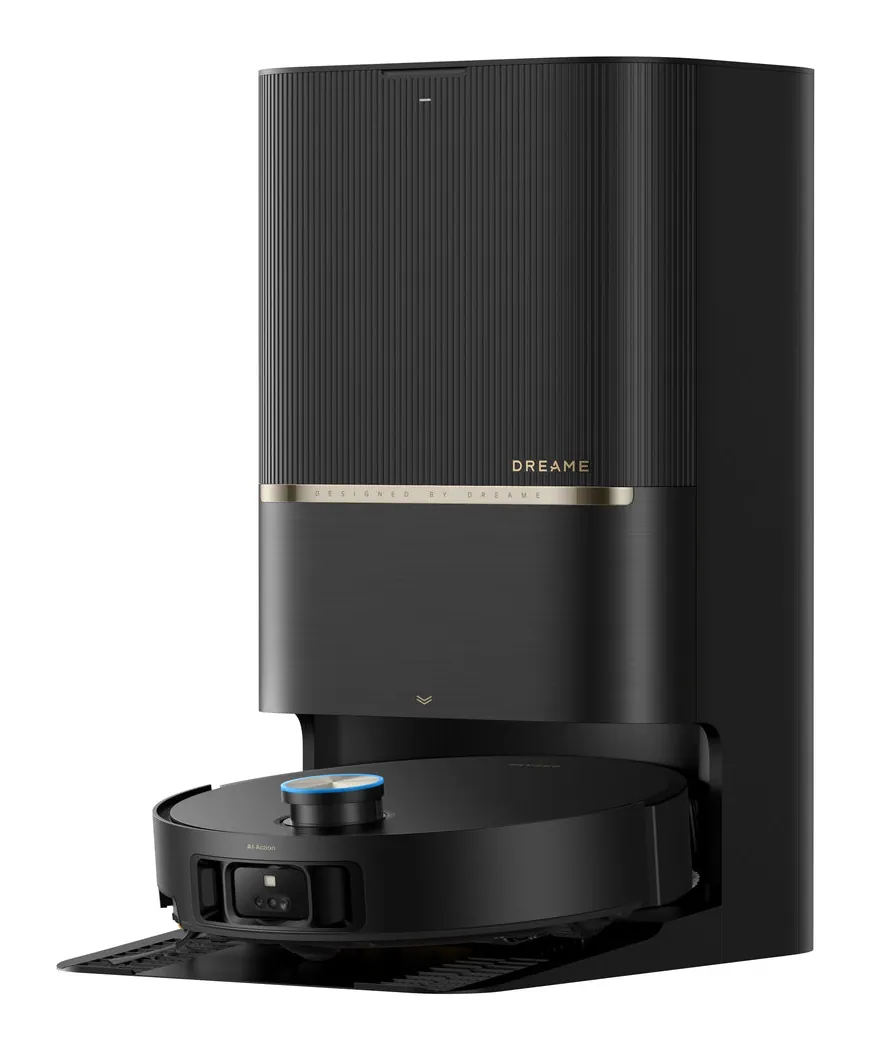 Image: Dreame
Dreame L60 Pro Ultra
Dreame · China · Household
- Suction power: 35,000 Pa
- Runtime per charge: 3.7 hrs
- Climbable threshold: 88 mm
- Battery: 6,400 mAh
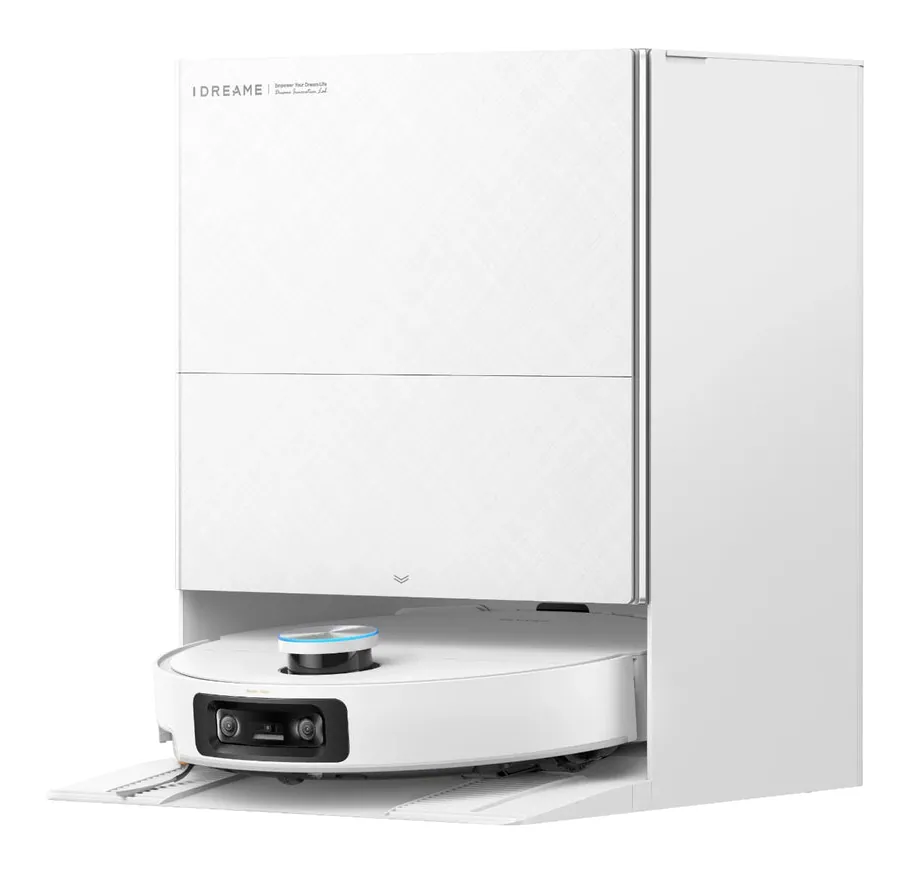 Image: Dreame
Dreame X60 Ultra
Dreame · China · Household
- Suction power: 35,000 Pa
- Runtime per charge: 4.3 hrs
- Climbable threshold: 88 mm
- Battery: 6,400 mAh
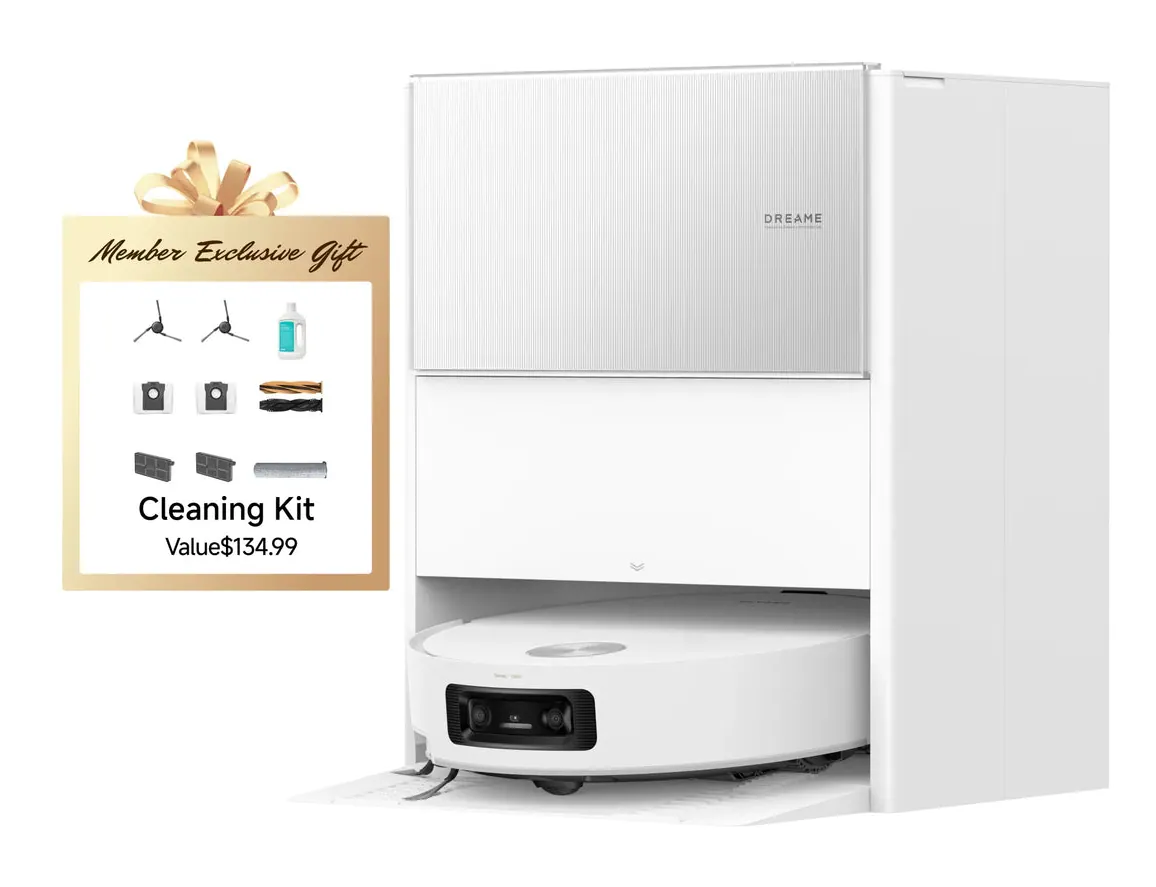 Image: Dreame
Dreame Aqua10 Roller
Dreame · China · Household
- Suction power: 30,000 Pa
- Climbable threshold: 60 mm
- Battery: 6,400 mAh
 Image: Dreame
Dreame L60 Ultra
Dreame · China · Household
- Suction power: 35,000 Pa
- Climbable threshold: 50 mm
- Battery: 5,200 mAh
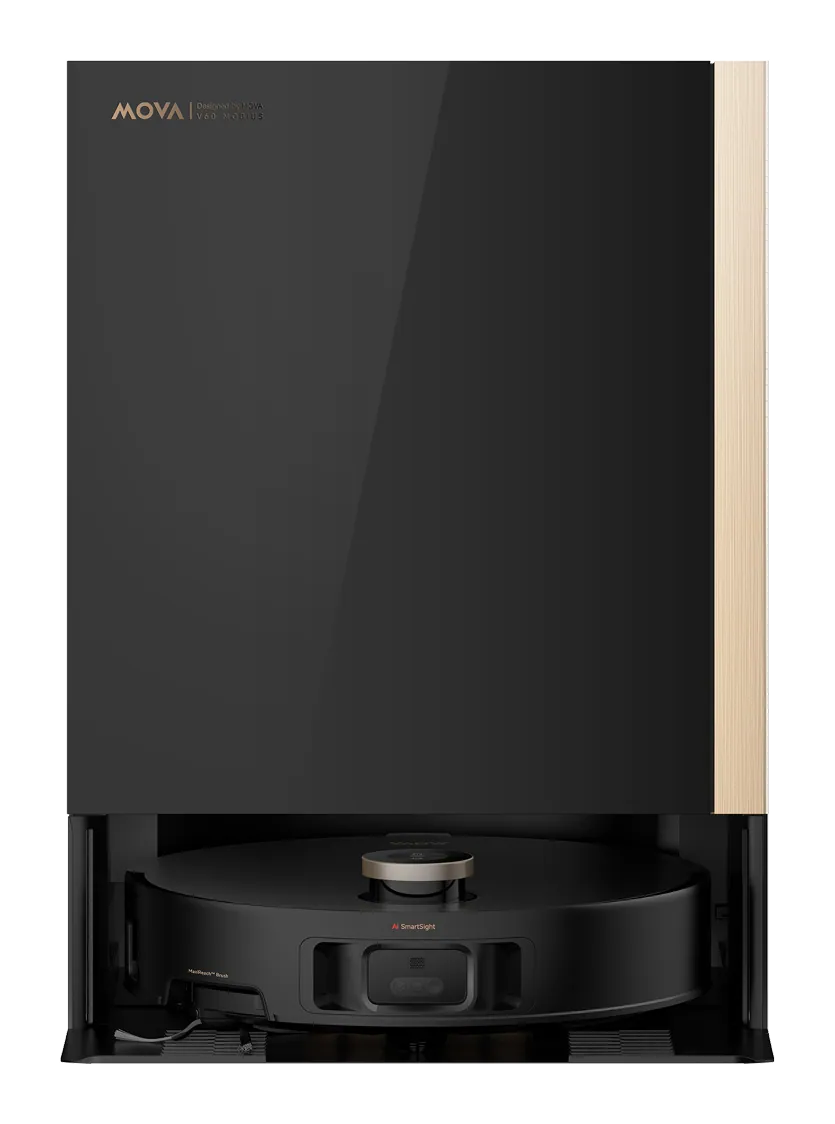 Image: Mova
Mova Mobius 60
Mova · China · Household
- Suction power: 30,000 Pa
- Climbable threshold: 50 mm
- Battery: 6,400 mAh
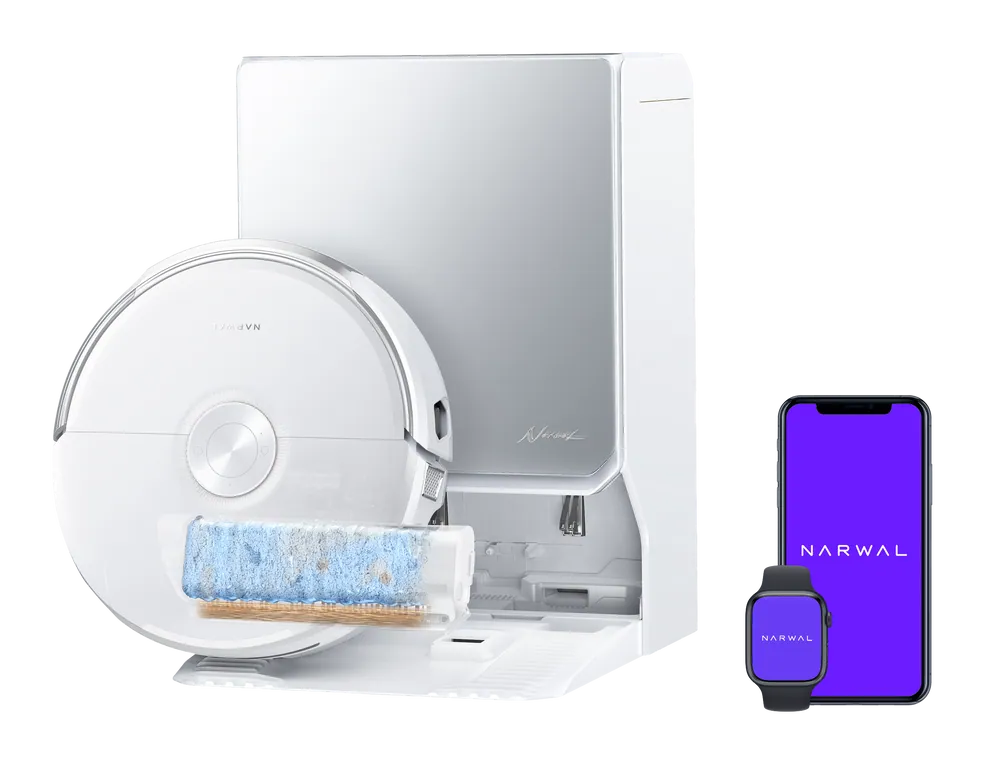 Image: Narwal
Narwal Flow 2
Narwal · China · 2026 · Household
- Suction power: 31,000 Pa
- Climbable threshold: 40 mm
- Noise level: 57 dB
- Battery: 7,000 mAh
- Hard floor, Carpet, Finding lost items
Roborock Saros 20
Roborock · China · 2026 · Household
- Suction power: 36,000 Pa
- Climbable threshold: 45 mm
- Battery: 6,400 mAh
- Hard floor, Carpet, Thresholds
 Image: Mova
Mova S70 Ultra Roller
Mova · China · Household
- Suction power: 32,000 Pa
- Climbable threshold: 30 mm
- Battery: 6,400 mAh
Roborock Saros 20 Neo
Roborock · China · 2026 · Household
- Suction power: 36,000 Pa
- Climbable threshold: 45 mm
Dreame L50s Pro Ultra
Dreame · China · 2026 · Household
- Suction power: 30,000 Pa
- Climbable threshold: 22 mm
- Noise level: 52 dB
- Battery: 5,200 mAh
Buying guide
These days, a robot vacuum with a mopping function is expected to do far more than pick up crumbs: it vacuums, mops, washes its own mops with hot water, dries them, empties its dust bin into a bag and, at best, even refills fresh water on its own. At the same time, the market has become confusing. Manufacturers try to outdo each other with suction power claims of 30,000 Pa and more, with climbing legs, extendable arms and AI cameras. This buying guide explains which features really matter in everyday use, which figures you can safely ignore and where paying more is worth it. The information is as of October 2026.
Is a robot vacuum with a mopping function worth it?
A robot vacuum and mop combo is worth it above all for households with lots of hard flooring such as tiles, vinyl, laminate or sealed hardwood. There, it takes over daily vacuuming and regular damp mopping, so you only have to do a thorough clean yourself occasionally. Those who benefit most include:
- Working people and families who want to remove crumbs, sand and dust every day without reaching for the vacuum themselves
- Households with a dog or cat, where hair and paw prints keep coming back
- People who find bending down and mopping difficult
- Apartments with an open kitchen, where grease splatters and stains end up on the floor
A combo device makes less sense if almost all rooms have high-pile carpet, if cables, toys or clothes are constantly lying on the floor, or if you have delicate, unsealed wood or oiled parquet that can't handle moisture. You should also stay realistic about mopping: independent lab measurements show that many devices are weak at removing dried-on stains such as coffee or grease. So a robot doesn't completely replace an occasional thorough clean, but it keeps the floor noticeably cleaner between cleaning days.
What mopping systems are there? Roller, rotating pads and vibrating plates
The mopping system determines the result more than the suction power does. Four designs are common in 2026:
- Rotating pads: Two round mops rotate in opposite directions and rub over the floor with pressure. This is currently the most common design in the premium segment, for example on the Dreame L60 Pro Ultra, Dreame X60 Ultra, Mova Mobius 60 or Roborock Saros 20. Advantage: many models can extend a pad sideways and so mop right up to baseboards. Disadvantage: between two wash cycles in the station, the pad keeps mopping with an increasingly dirty cloth.
- Mopping roller: A rotating roller is continuously rinsed with fresh water while driving and squeezed out by a scraper edge, with the dirty water ending up in a tank in the robot. This way, the device always mops with a comparatively clean surface. Examples are the Narwal Flow 2, Dreame Aqua10 Roller, Mova S70 Ultra Roller and Ecovacs Deebot X12 OmniCyclone. The roller is considered strong on large hard floor areas and stains, but is mechanically more complex.
- Vibrating mopping plate: A flat cloth is moved back and forth quickly to scrub. Vibrating systems can be found at Shark, Rowenta and yeedi, among others, and in the Roborock Saros 20 Sonic.
- Dragged mopping cloth: A damp cloth is simply pulled along behind. That's enough for removing fine dust, but not for stains. This simple solution is mainly found in entry-level devices, for example from Medion, Kärcher or Tapo.
As a rule of thumb: if you mainly have hard floors and place a lot of value on mopping results, look at roller and pad models with hot-water washing. If you mainly want to vacuum and only mop now and then, a vibrating system or a simple cloth will do.
The key buying criteria for robot vacuum and mop combos
In addition to the mopping system, there are a handful of criteria that make the difference in everyday use. The following guideline values come from manufacturer specifications, specialist media and consumer organization evaluations.
- Mop lift on carpet: The robot must lift the mops as soon as it detects carpet, otherwise the carpet gets wet. Around 10 to 14 mm of lift is common today, for example 10.5 mm on the Dreame X60 Ultra or 14 mm on the Dreame Aqua10 Roller. For high-pile carpets, the safest solution is a robot that can detach its mops in the station before vacuuming carpets. Several current premium models offer this feature, including the Roborock Saros 20.
- Edge cleaning: Round robots have trouble reaching corners. Extendable side brushes and extendable mops or rollers help. According to the manufacturer, the mop on the Dreame X60 Ultra extends by up to 4 cm, and on the Dreame Aqua10 Roller, the roller does too. If you have lots of baseboards, furniture legs and kitchen units, pay attention to this.
- Thresholds and steps: Classic robot vacuums manage about 2 cm. Newer chassis with lifting legs get significantly further: according to the manufacturer, the Roborock Saros 20 climbs double thresholds of 4.5 plus 4.4 cm, and the Dreame X60 Ultra and L60 Pro Ultra up to 8.8 cm with double steps. Measure your highest door threshold before buying and allow for a safety margin.
- Obstacle detection: A LiDAR laser for navigation is standard. For socks, cables and pet waste lying around, you also need a camera with object recognition or structured light. Top models claim 240 to over 300 recognized object types, and according to the manufacturer, the Dreame X60 Ultra detects objects as small as 10 mm.
- Height: If you want it to clean under sofas and beds, measure the clearance. Models with a retractable or concealed laser turret are lower, for example 7.95 cm for the Roborock Saros 20 or 7.95 cm with the turret retracted on the Dreame X60 Ultra.
- Noise level: Manufacturer figures usually refer to the quietest mode. In our database, the stated values range from 52 dB for the Dreame L50s Pro Ultra and around 57 dB for the Narwal Flow 2 to more than 70 dB for individual models. Often more important than the robot itself is the station: emptying the dust bin is very loud for a few seconds.
How many Pa should a robot vacuum have?
Suction power in pascals (Pa) is the best-known number on the spec sheet, but also the least meaningful. There's no standardized measurement method: some manufacturers measure directly at the motor, others at the nozzle, and the figure given is usually the maximum value of the strongest setting. Consumer advocates therefore explicitly advise treating claims of many thousands of Pa as an advertising figure that says little about actual cleaning performance. Airflow, brush design and the seal of the suction opening are also decisive.
As a rough guide, recommendations from specialist media can be summarized as follows:
- For mostly hard floors, around 7,000 Pa is enough.
- For an average household with a few rugs, about 10,000 Pa makes sense.
- With lots of carpets or pets, at least 15,000 Pa is recommended.
Almost all current premium models are well above this at 30,000 to 36,000 Pa, and even inexpensive devices such as the Mova E50 Pro Ultra advertise 30,000 Pa. Suction power has therefore become hardly a distinguishing feature. Instead, pay attention to whether the brush is suitable for carpets, whether the robot automatically boosts power on carpet and whether it also reaches carpet fibers deeper in the pile.
Self-cleaning robot vacuum and mop: what does the station need to do?
The station turns a robot you have to look after every day into a device that works on its own for weeks. However, it often adds a few hundred euros to the price and takes up space. These functions are relevant:
- Auto-empty: The station empties the robot's dust bin into a bag. Manufacturers state capacities of 60 to 120 days, for example up to 100 days for many Dreame and Mova models. Bagless stations save running costs, but need emptying more often.
- Hot-water washing: The mops or roller are washed in the station. Top stations work with water up to 100 °C, including the Dreame X60 Ultra, Roborock Saros 20 and Narwal Flow 2. Cheaper stations wash at 45 to 80 °C or only with cold water. Hot water dissolves grease better and reduces odors.
- Drying: Warm air dries the mops after washing, typically at 45 to 70 °C. Without drying, damp cloths can quickly start to smell musty.
- Detergent dosing: The station automatically adds cleaning solution. Make sure to use only solutions approved by the manufacturer.
- Auto-refill and plumbed water connection: As standard, you fill the fresh water tank (often 4 to 5.5 liters) by hand and empty the dirty water tank. With a plumbed water connection, the station is connected to the water supply and drain, for example as an optional kit for the Narwal Flow 2. This is the biggest convenience gain of all, but requires a suitable location near a sink, washing machine or drain, and installation is usually DIY.
If you don't want a station at all, there are still simple models with a charging dock. But then you'll have to take care of the dust bin, water tank and mopping cloth yourself after every run.
Robot vacuums for pet hair, small apartments and multiple floors
Pet hair: Long hair likes to wrap around the main brush. Rubber brushes or split brushes designed to prevent tangling help, as do a large dust bin and an auto-empty station with a large bag. Also check whether the camera detects and avoids pet waste, and pay attention to carpet performance if you have pets. Independent lab tests specifically check how well devices cope with long hair, and the differences are large.
Small apartment: In a studio or one-bedroom apartment, space for the station is often the bottleneck. Large all-in-one stations are often around half a meter tall; the Narwal Flow 2 station, for example, is about 53 cm. More compact solutions such as the mini station of the Ecovacs Deebot Mini 2, at around 32 by 40 by 38.5 cm, are a compromise. For small areas, a smaller battery is usually enough, while maneuverability, a low profile and a quiet station count for more.
Multiple floors: Most robots store several maps. According to Roborock support, up to four floors are supported. After being moved, the robot recognizes which floor it's on by itself, while the station stays where it is. Without a station upstairs, however, you have to carry the robot, and the water tank and mops aren't serviced automatically there. If you want two floors mopped regularly, it's better to budget for two devices or a second, simpler robot. Robots that climb stairs themselves, such as the Roborock Saros Rover that has been presented, are still the exception; whether and when such devices will be widely available is open.
Is a robot vacuum a power hog?
No, not the robot itself. While running, robot vacuums typically need about 30 to 100 watts, whereas a classic canister vacuum needs 500 watts or more. A 90-minute cleaning run at around 40 watts uses about 0.06 kWh. In standby mode, the station and robot draw about 1 to 3 watts depending on the model, which adds up to 9 to 26 kWh over a year if the station stays permanently plugged in.
The difference comes from the station's convenience features: hot-water washing and heated drying need noticeably more energy than the robot itself. In consumer organization evaluations that calculate daily cleaning including standby and drying, the most economical device is far below a vacuum cleaner, while the most power-hungry combo device uses about as much electricity as a significantly more powerful classic vacuum. Many manufacturers don't publish exact power figures for the stations' heating and drying. There's also no official EU energy label for robot vacuums, as the EU ecodesign and labeling rules for vacuum cleaners explicitly exclude robots.
You can save by shortening the drying time in the app, only using hot washing when needed and not mopping every room every day.
How much does a good robot vacuum and mop combo cost?
The price range is enormous. Independent market overviews list prices for robot vacuum and mop combos between around €240 and €1,300, and top models now go beyond that. Our database yields roughly four price ranges:
- Under €300: Simple devices with a mopping cloth or plate, usually without a mop-washing station, such as the Medion S30 SW (from €129), Tapo RV20 Max (from €179.90) or Xiaomi Robot Vacuum H40 (from €249.99). Ideal for small apartments with modest mopping demands.
- €300 to €600: Entry into all-in-one stations with auto-empty and mop washing, such as the Mova E50 Pro Ultra (€399 to €499), Ecovacs Deebot T80S Omni (from €399), Ecovacs Deebot T90 Pro Omni (from €499) or Dreame L10s Ultra Gen 3 (€499 to €599).
- €600 to €1,000: Lots of features at a fair price, often with hot-water washing up to 100 °C, extendable mops and a camera, for example the Mova S70 Ultra Roller (€599 to €999), Dreame L50s Pro Ultra (from €749), Roborock Saros 20 Neo (from €899) or Mova Mobius 60 (€569 to €1,199).
- Over €1,000: Flagships with a climbing chassis, dual camera, the best station and often a plumbed water option, such as the Narwal Flow 2 (€1,299 to €1,499), Roborock Saros 20 (€1,499) or Dreame X60 Ultra ($1,499.99 in the US).
Prices change quickly, and flagships are often available much more cheaply just a few months after launch. Buying the previous year's model is often the best value choice.
App, data privacy and Matter: what to look out for?
A modern robot vacuum and mop is a connected device with a camera, room map and Wi-Fi access. That brings convenience, but also risks. In 2024, security researchers showed for several models from a major manufacturer that devices could be taken over via Bluetooth from nearby and that the camera and microphone were accessible. After initial hesitation, the manufacturer announced fixes. As early as 2022, it became known that images from development units of another manufacturer, which had been sent to external service providers to train an AI, had surfaced on social media.
You should keep these points in mind:
- Check whether camera images are processed locally and whether you can switch off photo and video functions in the app.
- Look for regular firmware updates and how long the manufacturer promises to provide updates.
- If possible, connect the robot to a separate guest or IoT Wi-Fi network.
- Delete the map and account before selling a device.
Since August 1, 2025, additional cybersecurity requirements have applied in the EU to internet-connected radio equipment, which among other things require the protection of personal data. This raises the minimum level, but doesn't replace your own diligence.
Matter is the cross-manufacturer smart home standard. Since version 1.2, there's a device type for robot vacuums, and with version 1.4, you can also target cleaning in individual rooms. In 2025, Roborock added Matter to several models via an update, so that they can be controlled in Apple Home, for example. In everyday use, this means: basic functions such as start, stop and, depending on the Matter version, room selection can be controlled via the major smart home platforms, while map editing, no-go zones and station settings usually still require the manufacturer's app. Some manufacturers only announce Matter as a later update, so when buying, only rely on features that are already available.
Care, maintenance and running costs
Even a self-cleaning robot needs care. Here are the manufacturer's recommendations, using a current Roborock user manual as an example:
- Clean the main brush every two weeks, replace after 6 to 12 months
- Clean the side brush monthly, replace after 3 to 6 months
- Clean the washable filter every two weeks, replace after 6 to 12 months
- Replace mopping cloths every 1 to 3 months as needed
- Clean sensors and wheels monthly, rinse out the dirty water tank and the station's washing tray regularly
Running costs add up from dust bags, mops, filters, brushes and cleaning solution. An official accessory kit for the Roborock Saros 20 with four mops, three dust bags, two filters, main and side brushes, for example, costs €89.99. With regular use, roughly budget for one such kit per year plus cleaning solution. Roller models need new cloths less often, but a replacement roller is more expensive than a pair of pads. Bagless stations save on bags, but require more frequent emptying. Ask before buying how long spare parts will be available, as this is difficult to assess for many brands.
Common mistakes when buying
- Only looking at the Pa figure: Suction power claims aren't comparable and say little about cleaning results.
- Not measuring threshold height: If you don't know your highest threshold, you may buy a robot that never reaches certain rooms.
- Forgetting where the station will go: Many stations are over half a meter tall and need free space at the sides and in front.
- Ignoring carpet type: For high-pile carpet, a large mop lift or detaching the mops in the station is a must.
- Underestimating the plumbed water connection: If you mop daily, you'll otherwise be lugging water tanks regularly. Clarify early on whether a connection is possible at the intended location.
- Disregarding data privacy: Camera, microphone and room map are sensitive data. Updates and settings should be clarified before buying.
- Not factoring in running costs: Over the device's lifetime, bags, mops, filters and cleaning solution can easily cost more than an entry-level device.
- Believing Matter promises: Announced features sometimes arrive late or only in limited form.
Conclusion
A robot vacuum with a mopping function is worth it for most households with hard floors, as long as you keep your expectations of mopping realistic. In 2026, suction power is hardly a distinguishing feature anymore; what matters more is the mopping system, the station's capabilities, mop lift on carpet, threshold height and reliable obstacle detection. For a very good overall package with hot-water washing, drying and auto-empty, you no longer have to spend €1,500 today; many models between €600 and €1,000 are similarly equipped. Paying more is mainly worth it for climbing chassis, a plumbed water connection and particularly good edge cleaning. Factor in running costs, station space and data privacy from the start, and the robot will be a real relief in everyday life.
Frequently asked questions
Is a robot vacuum with a mopping function worth it?
Yes, especially if you mainly have hard floors such as tiles, vinyl or laminate. It keeps the floor clean between cleaning days, but doesn't completely replace thorough mopping for dried-on stains.
How many Pa should a robot vacuum have?
For hard floors, about 7,000 Pa is enough; for an average household, around 10,000 Pa; with pets and lots of carpets, at least 15,000 Pa. Since there's no standardized measurement method, manufacturer figures are only roughly comparable.
Which robot vacuum and mop is self-cleaning?
Self-cleaning models are those with a mop-washing station that washes and dries the mops or roller, with water up to 100 °C on top models. Many stations also empty the dust bin and dose cleaning solution.
Which is better: mopping roller or rotating pads?
A mopping roller is continuously rinsed with fresh water while driving and therefore mops with a clean surface. Rotating pads rub with pressure and can often be extended sideways, which helps along edges and baseboards.
Which robot vacuum is suitable for pet hair?
Look for rubber or anti-tangle brushes, an auto-empty station with a large bag, good carpet performance and a camera that detects pet waste. The advertised Pa figure alone says little about hair pickup.
Which robot vacuum fits a small apartment?
In small apartments, space for the station is usually the deciding factor. Compact stations or simple models with a charging dock often make more sense there than large all-in-one stations around half a meter tall.
Is a robot vacuum a power hog?
No. While cleaning, the robot usually needs 30 to 100 watts, and a 90-minute run uses about 0.06 kWh. The station's hot-water washing and heated drying, as well as permanent standby of about 1 to 3 watts, use more electricity.
Do robot vacuum and mop combos work with Matter?
More and more models support Matter; from version 1.4, cleaning individual rooms is also possible. Map editing and station settings usually remain reserved for the manufacturer's app, and some manufacturers only add Matter later via an update.
Buying guide sources
- Stiftung Warentest: Saugroboter im Test – die besten Saug-Wisch-Roboter (test.de)
- netzwelt: Wie viel Saugleistung braucht ein Saugroboter? Zählt mehr als der Pa-Wert (netzwelt.de)
- eufy/Anker: Wie viel Strom verbraucht ein Saugroboter? (anker.com)
- Guidelines zu den EU-Verordnungen 665/2013 und 666/2013 (Staubsauger) – Ausschluss von Robotersaugern (energimyndigheten.se)
- UK Government: Regulation (EU) 2022/30 Factsheet (Cybersicherheit für Funkgeräte, ab 1.8.2025) (gov.uk)
- Security Affairs: Hackers can take over Ecovacs home robots to spy on their owners (securityaffairs.com)
- MIT Technology Review: A Roomba recorded a woman on the toilet. How did screenshots end up on Facebook? (technologyreview.com)
- Roborock: Matter Protocol Update (newsroom.roborock.com)
- smarthomeassistent.de: Saugroboter mit Matter 1.2 und 1.4 (smarthomeassistent.de)
- Narwal: Flow 2 Robot Vacuum and Mop – Produktseite (ca.narwal.com)
- Dreame: X60 Ultra Robot Vacuum – Produktseite (dreametech.com)
- Notebookcheck: Roborock Saros 20 now available in Europe (notebookcheck.net)
- Roborock Store DE: Zubehörset für Saros 20 (de.roborock.com)
- Roborock Q Revo Bedienungsanleitung: Routinewartung (manualslib.mx)
- Roborock Support: Multi-Floor-Karten (mehrere Etagen) (support.roborock.com)
Related guide: Robot vacuum buying guide: navigation, mopping, docking station